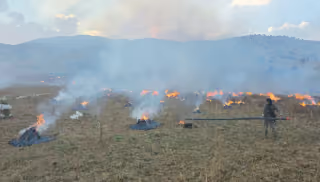
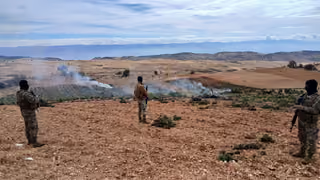
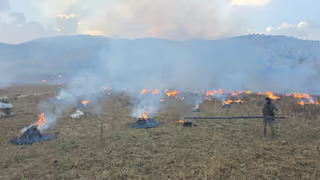
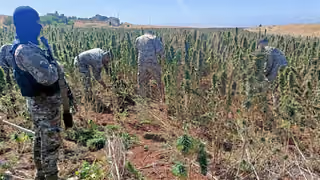
Internal Security Forces director general Maj. Gen. Ashraf Rifi supervised the destruction of hashish crops in several areas of the Bekaa on 4 August 2005, accompanied by senior security officials.[1] He said the campaign would continue for ten days, after which all hashish crops would be eliminated, with six eradication axes each supervised by an officer.[1] Rifi said he was surprised by the extent of cultivation, blaming neglect, and said residents had not expected their crops to be eradicated.[1] All members of the security forces were ordered to report any drug fields so due process could take its course, and Rifi warned farmers that the authorities would keep tracking cultivation and punish offenders.[1]
Costly campaign
Rifi acknowledged the eradication was very costly, with tractors and workers paid for and army personnel pulled from ordinary duties to supervise the work, but insisted it must continue at all costs because the credibility of Lebanon and its security forces was at stake.[1] He announced the ISF would propose talks with the United Nations and other organisations on helping farmers earn a living legally, noting drug cultivation grew from economic pressure when other work failed to pay.[1] Rifi said drug cultivation harmed all of Lebanon and its society and had no positive side.[1]