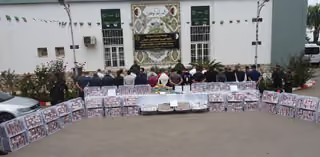
Béjaïa wilaya security, through the Research and Intervention Brigade of the wilaya judicial police, dismantled an organised network of nine people, including the main supplier, who was the subject of three arrest warrants.[1] According to a Béjaïa police statement, the operation followed field information that two people were about to complete a sale of a considerable quantity of psychotropic substances in the commune of Oued Ghir.[1] Officers in plain clothes were posted to watch the entrances and exits of the commune.[1]
The two suspects were found with a third man carrying a backpack; the three resisted violently, tried to flee through the scrub and threw the bag into a watercourse beside the road.[1] Police arrested the three, aged 38, 26 and 32, and recovered the bag, which held 1,080 capsules of pregabalin 300 mg and 20,500 dinars described as proceeds of dealing.[1]
Investigators identified the main supplier as a 38-year-old man living in Barbacha, wanted under three arrest warrants for similar cases, and, with the prosecution, obtained two warrants to search apartments he used.[1] In the Barbacha apartment police arrested four people, aged 34, 32, 27 and 28, and seized a piece of Indian hemp, cannabis resin, one ecstasy tablet, a precision electronic scale with traces of cocaine, and a notebook listing the network’s customers, quantities sold and sums paid.[1] In a second apartment in the coastal village of Saket, police stopped the supplier and a 52-year-old accomplice as they were leaving with a backpack; despite violent resistance, the bag held 3,870 pregabalin 300 mg tablets, 600 ecstasy tablets, 48 million centimes described as proceeds, and three mobile phones.[1]
Police put the operation’s seizures at 4,950 pregabalin 300 mg capsules, 601 ecstasy tablets, pieces of drugs, a precision scale bearing cocaine traces, more than 50 million centimes, three mobile phones and what the statement called white weapons.[1] A criminal file was opened against the nine, who were presented to the public prosecutor at the Béjaïa court, and the prosecutor referred the file to the investigating judge.[1] The investigating judge ordered seven of them held in pre-trial detention and placed two under judicial supervision pending trial.[1]