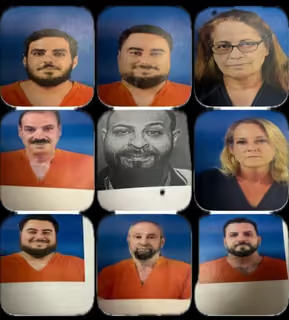
Nine Van Zandt County smoke-shop cases dropped, $5M in assets returned
Nine people arrested in a September 2026 operation against 13 East Texas Scorpion Smoke Shop locations will no longer face criminal charges after Van Zandt County prosecutors declined to try the cases, and the $5 million in seized assets is being returned. The sheriff's office said officers seized 11,468 suspected THC products and 5,475 grams of marijuana in the raids.
🇺🇸 Van Zandt County, Texas · Texas, United States
Arrested
9
Charged
9
Cannabis
5.475 kg
Sites
13
Agencies
Van Zandt County Sheriff's Office, Texas Department of Public Safety +1
Nine people arrested during a series of East Texas smoke shop raids will no
longer face criminal charges after prosecutors declined to try the cases.[1]Van Zandt County District Attorney Tonda Curry explained in a letter that
dismissing the cases was the best option for all parties when considering the
risk, time and cost of a trial.[1]The decision resolves criminal cases
connected to the investigation, which included the seizure of thousands of
suspected illegal THC products.[1]
The Van Zandt County Sheriff’s Office announced the conclusion of a widescale
operation targeting more than a dozen East Texas smoke shops, resulting in the
arrests of nine people, the seizure of hundreds of pounds of drugs and nearly $5
million in U.S. currency and other assets.[2]On 22 September 2026 the Texas
Department of Public Safety investigated and executed search warrants at 13
Scorpion Smoke Shop locations, targeting the illegal sale and distribution of
THC and hemp products.[2]Officers seized 11,468 suspected THC products, 5,475
grams of marijuana, 33,455 grams of suspected psilocybin mushrooms, 23 vehicles
and nearly $5 million in currency and other assets.[2]The $5 million in
seized assets is being returned to their owners.[1]
According to jail records, the nine were arrested on warrants charging them with
money laundering valued at more than $150,000 but less than $30,000.[2]They
were also charged with engaging in organized criminal activity and with
manufacture and delivery of a controlled substance in penalty group 2 weighing
less than 400 grams.[2]David Sergi, an attorney for the individuals arrested,
said potential changes to state law could have assisted the defense if the
prosecution had moved forward.[1]The dismissals coincide with a reported
change in state leadership, with Democrat Vikki Goodwin, who opposes an outright
ban on hemp-derived THC products, due to take office as lieutenant governor in
January.[1]Sergi said the state is now at a policy point where it need not
rely on technical definitions and can look to the legislature to resolve the
question.[1]
Photos and video
Van Zandt County Sheriff's Office handout photograph of the seized assets from the smoke shop operation, published with the KLTV account of the arrests. Photo: Van Zandt County Sheriff's OfficePhoto details
Every number and detail the sources state, with the sources that state it.
Arrested
9
Charged
9
Cannabis
5.475 kg
Sites
13
Vehicles confiscated
23
Value (official estimate)
USD 5,000,000
Agencies
Van Zandt County Sheriff's Office; Texas Department of Public Safety; Van Zandt County District Attorney's Office
Agency type
Police, Prosecutor
Cannabis
Herbal cannabis (5.475 kg)
Activity
Sale
Setting
Shop
Charges
money laundering valued at more than $150,000 but less than $30,000; engaging in organized criminal activity; manufacture and delivery of a controlled substance, penalty group 2, weighing less than 400 grams
Case stage
Acquitted
Region
Texas
Date
Publication date
Sources
KETK.com | FOX51.comketk.comCriminal charges dropped in THC raid, democratic positions could change legal landscape
KLTV 7kltv.com9 arrested, nearly $5M seized during Van Zandt County smoke shop busts
Open questions the AI reported
No date is given for the dismissal decision itself; 13 November 2026, the KETK account's publication date, stands in as the incident date.
The nearly $5 million is reported as currency and other assets together, with no separate figure for the cash alone or for the value of the cannabis.
The 11,468 seized THC products carry no published weight or laboratory confirmation, so only the 5,475 grams of marijuana is counted as cannabis by weight.
The 33,455 grams of suspected psilocybin mushrooms seized in the same operation are not cannabis and are not counted in the figures.
No trial, plea or later court step was reported; the accounts end with the dismissals and the return of the seized assets.
The accounts do not say how many of the 13 searched Scorpion Smoke Shop locations were within Van Zandt County.
The KETK account relies on the district attorney's letter and the attorney's statements; the sheriff's office's own announcement of the operation was not opened.
9 arrested, nearly $5M seized during Van Zandt County smoke shop busts (KLTV 7) could not be opened again to check its quotations (The browser page answered HTTP 404.; archived fallback unavailable (no accessible Wayback capture was found). No AI research was started); what it says is as the AI read it.
Kylie Williams, 30, of Verona Borough faces child endangerment charges after police said suspected marijuana was found in her child's backpack at Verner Elementary School. She was taken to the Allegheny County Jail, and accounts differ on whether she had posted bail.
Thirty-six people, nine of them in the country illegally, have been charged in a federal investigation into a Mexico-based drug trafficking and money laundering organization operating in South Carolina, the Justice Department said. During the investigation the DEA seized 34 pounds (15.4 kg) of marijuana, along with large quantities of fentanyl, cocaine and methamphetamine.
Alabama basketball guard Aden Holloway, arrested in March 2026 for possession of marijuana and failure to affix a tax stamp, had his first-degree marijuana charge dismissed in September after completing a court second-chance program. Alabama reinstated him on 6 October and, after a team-imposed five-game suspension, he returned to the court on 9 November.
A federal grand jury indicted six men over a marijuana distribution conspiracy across South Carolina's Lowcountry, with two accused of conspiring to distribute 1,000 kilograms or more. Four of the defendants face a maximum sentence of life in prison; no trial date or custodial status was reported.