Charles Lynch opened Central Coast Compassionate Caregivers in Morro Bay on 1 April 2006 with a city business license, paying taxes and checking physician referrals under California’s Compassionate Use Act.[1][2] The city attorney had approved the licence, the police chief inspected the shop, and the mayor came to its ribbon-cutting ceremony.[1] Before opening, Lynch had contacted the Drug Enforcement Administration, which told him it was up to cities and counties to decide about dispensaries.[2] The shop ran for almost a year without major problems or complaints.[1][2]
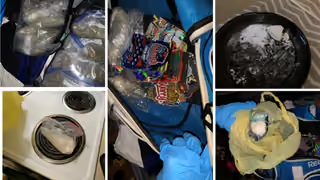
On 29 March 2007 the local sheriff and DEA agents raided the dispensary and Lynch’s home in full paramilitary attire.[1][2] They seized his medicine and money, including a backpack containing $27,000 described as possible proceeds from recent sales.[2][3] Lynch was not arrested in the raid.[1][2] Sheriff Pat Hedges had spent eleven months investigating the dispensary and, unable to get a search warrant from state courts, had turned to the DEA.[2]
Lynch reopened the dispensary on 7 April 2007 with the approval of the city.[1][2] A week later the DEA threatened his landlord with forfeiture of the property unless he evicted the shop, and on 16 May 2007 the dispensary closed permanently.[1][2] Two months later agents arrested Lynch at his home and charged him with five federal marijuana counts.[2] A federal jury, which could not hear about California’s medical marijuana law, convicted him on all counts in August 2008.[2][4]
On 11 June 2009 Judge George H. Wu of the federal court in Los Angeles sentenced Lynch, 47, to a year and a day in prison, staring straight ahead as the sentence was imposed.[5] Prosecutors had sought the five-year mandatory minimum and portrayed him as a common dealer who sold more than $2 million of marijuana, including repeated sales to people under 21; his lawyers had been barred from arguing medical necessity for seriously ill patients.[5] Applying the safety valve, the judge found Lynch posed no greater danger to the public than the dispensary’s other participants and added four years of supervised release.[6]
Lynch appealed, and in 2012 Americans for Safe Access filed an amicus brief supporting him, noting the administration still sought a five-year term while the judge weighed its declarations of tolerance toward medical marijuana.[7]
Prosecutors told the jury that Lynch had sold $2m worth of marijuana to patients from his dispensary between its opening in 2006 and the DEA raid in March 2007.[4] Lynch’s lawyers argued entrapment by estoppel, saying a federal agent had told him local jurisdiction would prevail, and prosecutors and the jury dismissed the claim.[4] The judge ruled that state medical marijuana law was irrelevant in federal court and stopped the patient Owen Beck and others from testifying once their medical conditions were mentioned.[4] Jury forewoman Kitty Meese said afterwards that the jurors felt Lynch intended well but had no choice under the federal law they were given.[4]