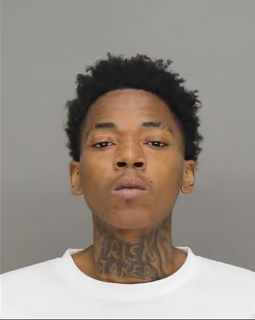
Tallahassee man sentenced to 25 years in federal drug case; 1 lb marijuana seized
A federal court sentenced Christopher L. Daniels, 47, of Tallahassee, Florida, to 25 years in prison after a jury convicted him of possessing controlled substances with intent to distribute and possessing a firearm as a felon. A January 2026 search of his home seized a pound (about 0.45 kg) of marijuana alongside methamphetamine, cocaine, crack cocaine, synthetic cathinones and four pistols.
🇺🇸 Tallahassee, Florida · Florida, United States
Charged
1
Convicted
1
Sentenced
1
Cannabis
453.6 g
Agencies
Tallahassee Police Department, Bureau of Alcohol +2
Christopher L. Daniels, 47, of Tallahassee, Florida, was sentenced to 25 years
in federal prison after a jury found him guilty of possessing controlled
substances with intent to distribute, including more than 50 grams of
methamphetamine, and possessing a firearm as a convicted felon.[1]United
States Attorney John P. Heekin announced the sentence on 10 November 2026.[2]Daniels had 12 prior felony convictions dating back to 1996, and his sentence
was enhanced because of multiple prior convictions for serious drug felonies.[3]
Evidence presented at trial showed that a Tallahassee Police Department
drug-trafficking investigation led officers to execute a search warrant at
Daniels’ home on 21 January 2026.[1]Officers seized a pound (about 0.45 kg)
of marijuana along with approximately 2.75 ounces of methamphetamine, an ounce
of cocaine, half an ounce of crack cocaine on an ironing board, about an ounce
of synthetic cathinones sold as molly and 64 tablets confirmed to be low-purity
methamphetamine.[1]Investigators also recovered four pistols inside the
house, including a Draco AK-47-style pistol near the crack cocaine, and evidence
on Daniels’ cellphone showed he was engaged in drug trafficking.[1]
Federal court records list the case as USA v. Daniels, No. 4:26-cr-00024, in the
Florida Northern District Court.[4]Identified in an April indictment as
Christopher Lamar Daniels, he was initially charged with possession with intent
to distribute multiple controlled substances, possession of a firearm in
furtherance of a drug-trafficking crime and possession of a firearm by a
convicted felon.[5]He was arraigned before U.S. Magistrate Judge Martin A.
Fitzpatrick in Tallahassee, with trial initially set for 15 June 2026 before
U.S. District Judge Robert L. Hinkle.[5]A federal jury found Daniels guilty
on 29 July 2026.[6]The Federal Public Defender’s Office represented Daniels
in the federal case.[6]At the time of his conviction, sentencing was set for
15 October 2026 before Judge Hinkle, when Daniels faced 25 years to life in
prison, 10 years to life of supervised release and up to $20 million in fines.[7]
The Tallahassee Police Department and the Bureau of Alcohol, Tobacco, Firearms,
and Explosives investigated the case jointly with assistance from the Drug
Enforcement Administration, and Assistant U.S. Attorney James A. McCain
prosecuted it.[1]Prosecutors handled the case under Project Safe
Neighborhoods, a federal initiative coordinating law enforcement against violent
crime.[2]
Photos and video
Collage of the drugs seized under the search warrant in the case, including methamphetamine, cocaine, crack cocaine, synthetic cathinones and marijuana. Photo: U.S. Attorney's Office, Northern District of FloridaPhoto details
Every number and detail the sources state, with the sources that state it.
Charged
1
Convicted
1
Sentenced
1
Cannabis
453.6 g
Sites
1
Prison
25 years
Agencies
Tallahassee Police Department; Bureau of Alcohol, Tobacco, Firearms, and Explosives; 🇺🇸Drug Enforcement Administration (DEA); U.S. Attorney's Office, Northern District of Florida
Agency type
Police, Anti-narcotics agency, Prosecutor, Court
Cannabis
Herbal cannabis (453.6 g)
Activity
Possession, Trafficking
Setting
Home
Charges
possession with intent to distribute various controlled substances including more than 50 grams of methamphetamine; possession of a firearm by a convicted felon; possession of a firearm in furtherance of a drug-trafficking crime
Fox 49fox49.tvFlorida man convicted of meth trafficking, illegal gun possession, federal prosecutors say
Open questions the AI reported
The sentencing announcement gives no separate date for the court hearing itself, after sentencing had earlier been scheduled for 15 October 2026; 10 November 2026 is the publication date and stands in for the incident date.
The prosecution did not state whether the pound of marijuana formed a separate count or what share of the 25-year prison term rested on it versus the methamphetamine, cocaine, synthetic cathinones and firearm offences.
Quantities of methamphetamine, cocaine, crack cocaine and synthetic cathinones are cited only to describe the mixed case and are excluded from cannabis figures; no cannabis street value was published.
The Tallahassee Democrat's sentencing summary describes the cannabis weight as about a pound, whereas the U.S. Attorney's Office states a pound of marijuana, converted here to 0.4536 kg.
Daniels was originally indicted on a third count of possessing a firearm in furtherance of a drug-trafficking crime, and the opened accounts do not state whether that count was dismissed or resulted in an acquittal before sentencing.
The sentencing announcement does not state whether Judge Robert L. Hinkle imposed a supervised release term or a fine alongside the 25-year prison sentence, nor whether Daniels was arrested during the 21 January search or later.
Nigel White was sentenced in Brown County court to 18 years in prison plus 10 years of extended supervision for his role in the August 2024 marijuana deal on Berner Street where Brandon Ramirez was shot dead. White, one of five people charged, had pleaded no contest to felony murder; prosecutors said he drove a getaway vehicle.
Charged 5Sentenced 1Prison 18 years initial confinement and 10 years extended supervisionDeaths 1
A federal judge sentenced Christopher S. Robinson, 31, of Springfield to 15 years in prison for possessing methamphetamine and fentanyl for distribution, a case that began with a May 2024 raid in Jacksonville. Police reported finding 1.8 pounds of cannabis there and charged him with felony cannabis possession with intent to deliver.
Six traffickers were sentenced on 4 November 2026 in the Northern District of West Virginia to a combined 37 years in federal prison for fentanyl, cocaine and methamphetamine trafficking. Officers seized about 68.15 kilograms of marijuana in two of the cases, including 150 pounds at a Keyser duplex, alongside fentanyl, methamphetamine and cocaine.
Twelve people convicted in a Midlands drug-trafficking conspiracy were sentenced to a combined 154 years in federal prison, the last of them reported on 4 November 2026. Marijuana was a small part of the case: a 2024 search recovered 400 grams of it alongside methamphetamine, cocaine, fentanyl and MDMA.