Syria destroys 12.2 tonnes of hashish and 400 million Captagon pills
Syria's Anti-Narcotics Directorate said a joint committee of three ministries destroyed 12.2 tonnes of hashish and 2.3 tonnes of cannabis plant on 22 November 2026. The same batch included 400 million Captagon pills and 6 kg of heroin, which the interior minister called one of the largest destructions since Assad's fall.
Syria’s Anti-Narcotics Directorate announced on Sunday 22 November 2026 that a
joint committee of the interior, justice and health ministries had destroyed
large quantities of narcotics and psychotropic substances.[1][2][3][4]The drugs had been seized by security forces in successive operations.[2][3][5][4]The quantities
were destroyed in batches under approved legal and environmental procedures.[6]The directorate described the destruction as reflecting integrated national
efforts against drugs.[7]
The destroyed material included 12.2 tonnes of hashish and 2.3 tonnes of
cannabis plant, 14.5 tonnes of cannabis in all.[1][3][5][4]The same batches included
400 million Captagon pills, 6 kilograms of heroin and 5.4 million other narcotic
pills, none of which is counted as cannabis.[8][2][3][5][4]The directorate also destroyed
equipment and chemicals used to smuggle, conceal, transport and manufacture the
drugs.[1][3][5][4]
Interior Minister Anas Khattab said the quantities were among the largest
destroyed since Bashar al-Assad’s government fell in December 2024.[6][9]Captagon production and trafficking grew during Syria’s conflict, and under
Assad the country became a main manufacturing and export centre for the pills,
sent to the Gulf through Jordan and Lebanon.[8][4]Since Assad’s overthrow the
new authorities have repeatedly announced seizures and foiled smuggling of
hashish and Captagon on the Lebanese and Jordanian borders.[8][3][4]
Photos and video
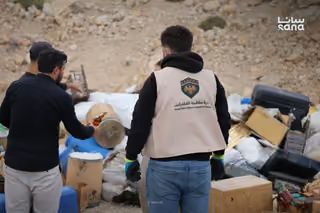
Anti-Narcotics Directorate officers destroying seized narcotics and psychotropic substances in Damascus on 22 November 2026. Photo: SANAPhoto details
Original
860 × 573 px · JPEG · 74 KB
SHA-256
bd78bb052f77bc70…
Retrieved
23 Nov 2026
Shown
our 320px copy; enlarging loads the original
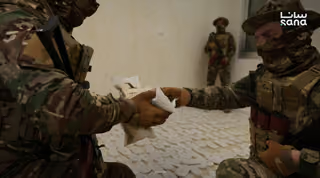
Source: الوكالة العربية السورية للأنباء (سانا)Another photograph from the destruction of seized narcotics in Damascus on 22 November 2026. Photo: SANAPhoto details
Original
2560 × 1707 px · JPEG · 701 KB
SHA-256
438c1553fb1d9173…
Retrieved
23 Nov 2026
Shown
our 320px copy; enlarging loads the original
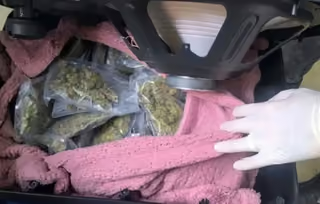
Source: الوكالة العربية السورية للأنباء (سانا)A worker of Syria's Anti-Narcotics Directorate during the destruction of seized drugs, in a photograph published by the directorate. Photo: Anti-Narcotics Directorate via Asharq Al-AwsatPhoto details
Original
1500 × 1000 px · WEBP · 112 KB
SHA-256
2324b9c4320393a7…
Retrieved
23 Nov 2026
Shown
our 320px copy; enlarging loads the original
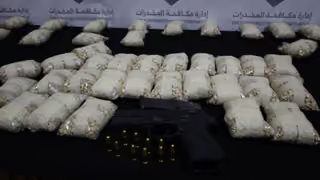
Source: الشرق الأوسطSome of the narcotics destroyed by Syria's Anti-Narcotics Directorate on 22 November 2026. Photo: Anti-Narcotics Directorate via Asharq Al-AwsatPhoto details
Original
1280 × 854 px · JPEG · 101 KB
SHA-256
ca35ee8cc4505e3e…
Retrieved
23 Nov 2026
Shown
our 320px copy; enlarging loads the original
Source: الشرق الأوسطSacks of seized drugs being prepared for destruction in Syria, a SANA handout dated 22 November 2026. Photo: SANA via Al BawabaPhoto details
الشرق الأوسطaawsat.comARسوريا تعلن إتلاف كميات كبيرة من المخدرات بينها 400 مليون حبة كبتاغون
Syria Nowsyrianow.netInterior ministry says 400 million captagon pills have been destroyed
Open questions the AI reported
The statements do not name the site of the destruction; the photographs published with them are captioned Damascus on 22 November 2026.
No count of cannabis plants was given; the 2.3 tonnes of cannabis plant is reported by weight only.
The statement does not identify the 5.4 million additional narcotic pills by substance.
The destruction was carried out in batches and the statements do not say whether it began before Sunday 22 November.
No arrests, suspects, charges or court cases were reported with the destruction; the operations that produced the drugs are not dated or located.
All accounts rest on the Anti-Narcotics Directorate's statement, carried by SANA and repeated by Asharq Al-Awsat and other outlets; no independent verification of the quantities was published.
Syrian border guards stopped a drug shipment from Lebanon at Sarghaya in the Damascus countryside, and the smugglers opened fire before fleeing back across the border, Syria's Defence Ministry said. The force seized 280 kilograms of hashish and 28,000 Captagon pills, but reported no arrests.
Syrian customs officers seized 2,600 grams of hashish hidden inside a loudspeaker at the Qamar border crossing with Lebanon during routine luggage checks. The operation also netted 17 grams of heroin, and customs filed a violation report while pledging tighter border surveillance.
Syria's Anti-Narcotics Department said 157 October operations dismantled 30 domestic trafficking networks and seized 582 kg of hashish. The monthly tally also listed Captagon, narcotic pills and crystal meth as separate non-cannabis seizures.
Aleppo anti-narcotics officers said several operations dismantled drug networks and led to arrests among their members. The authorities listed 9.571 kg of hashish and 21 g of marijuana among the seizures, alongside pills and a handgun.