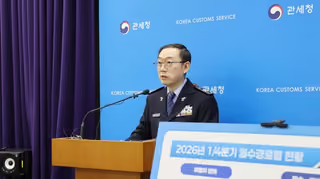
South Korea’s Korea Customs Service said cannabis made up 654 kg of the 1,007 kg of narcotics its officers intercepted on the way to the domestic market in the first half of 2026.[1] The agency reported the total in 767 cases, 24 percent more cases than a year earlier, though the weight fell 62 percent because 2025’s count had included drugs only passing through Korea.[1] Excluding transit shipments, customs called this year’s haul the largest on record for drugs bound for domestic distribution.[1]
Customs Commissioner Lee Jong-wook told a briefing the rise came from traveler smuggling and promised tougher screening of arriving passengers.[1] Smuggling cases carried by travelers rose 79 percent and the amount they carried rose 23 percent from a year earlier.[1] Seoul Economic Daily reported 509 traveler cases holding 175 kg of drugs, against 285 cases and 142 kg a year earlier, alongside 131 mail cases and 120 express cargo cases.[2] Seoul Economic Daily put the total at 1,007 kg, with cannabis the largest category at 654 kg, followed by methamphetamine at 230 kg, ketamine at 58 kg and cocaine at 2 kg.[2] Customs said seizures in international mail fell after it strengthened secondary inspections at five mail centres late last year, pushing traffickers onto passenger routes.[1]
Thailand was the largest source country, followed by the United Kingdom, Canada and Vietnam.[1] Seoul Economic Daily reported 778 kg of the seized drugs came from Thailand, then 43 kg from the United Kingdom, 34 kg from Canada, 32 kg from Vietnam, 28 kg from the United States and 19 kg from Japan.[2] People aged 39 or younger made up 59.3 percent of smuggling suspects, with teenagers up to 14 from one a year earlier, Seoul Economic Daily reported.[2] SBS News reported that the haul would have been enough for 33.58 million people to consume at once, and 59 percent of the suspects were in their 30s or younger, including 14 teenagers.[3]
Customs said it would extend its multilayer screening to express cargo, vessels, crew members and port workers and deploy more ion scanners, Raman spectrometers and millimeter-wave body scanners.[1] SBS News reported that customs runs 13 dedicated drug inspection checkpoints at six airports and plans more at regional airports in the second half of the year.[3] Lee urged travelers not to carry luggage or packages for acquaintances or strangers abroad because they could unknowingly become involved in drug trafficking.[1]
Separately, the customs service and U.S. Customs and Border Protection signed an addendum to their Container Security Initiative later that day in Seoul to extend cooperation to drug smuggling and other customs offences.[1]