Bronx employee held as 10 pounds seized in Norwalk vape raid
Norwalk police raided A-to-Z Tobacco Vape on Connecticut Avenue, arresting a Bronx-based employee on multiple drug-possession charges. Officers seized more than 10 pounds of unlicensed marijuana and THC products, Kratom products and $1,901 in cash.
🇺🇸 A-to-Z Tobacco Vape, Connecticut Avenue, Norwalk, Connecticut · Connecticut, United States
Norwalk police arrested a Bronx-based employee of A-to-Z Tobacco Vape during a
search-and-seizure raid at the shop.[1][2]The employee was charged with multiple
counts of drug possession after the search.[1]
Officers executed the warrant on Wednesday at A-to-Z Tobacco Vape on Connecticut
Avenue in Norwalk.[1]They seized more than 10 pounds of unlicensed marijuana
and THC products at the shop.[1][2]Officers also seized $1901 in cash and a
range of Kratom products in the same search.[1][2]Police said they also found 19
packages of Kratom pills and roughly two liters of liquid Kratom divided into
smaller containers at the shop.[1]Police photos of the seizure show pop-top
style containers and prerolled marijuana cigarettes found at the shop.[1][2]
Lt. Ramon Tejada said via press release on Monday that the raids were part of
ongoing investigations into smoke shops throughout Norwalk suspected of selling
cannabis without required licenses.[1]Connecticut law requires a state-issued
license to sell products containing a total THC concentration greater than 0.3%,
while cannabis itself must be sold in a licensed dispensary.[1]
The shop is at 108 Connecticut Avenue in Norwalk.[2]Officers found the marijuana behind the counter and inside a concealed compartment in a rear storage room closed by a fake electrical box with a remotely operated magnetic locking device.[2]The latest search seized 10.2 pounds of marijuana flower and THC products.[2]The arrested employee was identified as 35-year-old Abdo A. Al-Areqi of Bronx, New York.[2]He was charged with sale of over 1 kilogram of cannabis, sale of a narcotic substance, possession of over 8 ounces of cannabis and possession of a controlled substance.[2]He was held on $150,000 bond and scheduled to appear in court on Oct. 29.[2]The latest investigation followed a separate search and seizure warrant at the same location on Oct. 13.[2]
Norwalk police said the raids at two local smoke shops were part of ongoing investigations into shops suspected of selling cannabis without the required state-issued licenses.[3]Lt. Ramon Tejada gave that account in a press release issued on the Monday before the article was published.[3]
Photos and video
Police photos of the Kratom and marijuana products, including pop-top containers and prerolled marijuana cigarettes, found at A-to-Z Tobacco Vape. Photo: Courtesy of the Norwalk Police DepartmentPhoto details
Connecticut Postmsn.com11 pounds of marijuana, kratom seized in Norwalk smoke shop raids, police say
Open questions the AI reported
The incident date is taken as Wednesday 28 October 2026, deduced because the article says the A-to-Z warrant was executed on Wednesday eight days after the 20 October SONO raid; the photo caption instead says Thursday.
The headline total of more than eleven pounds covers cannabis products and Kratom products together and is therefore excluded; only the separately stated more than 10 pounds of marijuana and THC products is recorded as cannabis.
Kratom quantities, including 19 packages of pills and roughly two liters of liquid, are mentioned only to explain the mixed seizure and are excluded from cannabis figures.
Cash of $1901 is reported as seized cash, not as an official drug valuation, so no value is recorded.
The arrested Bronx-based employee was not named and no age was published.
No court outcome was reported; the multiple drug-possession charges were still pending.
The same article also reports a separate 20 October raid at SONO Vape and Tobacco, which is already covered by norwalk-sono-vape-marijuana-arrest and is left out here.
Only one accessible source for the A-to-Z raid was opened after web-search quota was exhausted.
The new account calls the latest search a Thursday warrant while reporting publication on 3 November 2026 and a court appearance on Oct. 29, leaving the weekday of the raid unclear; the existing 28 October 2026 date is unchanged.
Quantities from the separate Oct. 13 search at the same shop are mentioned only as background and are not recorded as figures for the 28 October raid.
The syndicated account repeats the Norwalk Hour's wording without independent reporting and gives no new detail on either arrest, the charges or a court date.
A man was arrested at the Sierra Blanca checkpoint in Texas after a K-9 alert led to the discovery of marijuana and three firearms, one reported stolen. The driver, held on an active warrant, was turned over to local authorities for extradition.
Passenger Jamaal Parker was arrested on November 10, 2026, after a wrong-way vehicle pursuit ended in a crash in Hamilton County, Tennessee. Sheriff's deputies reported finding 4 pounds (1.81 kilograms) of concentrated marijuana (THC) valued at over $13,000 and two loaded handguns in his backpack.
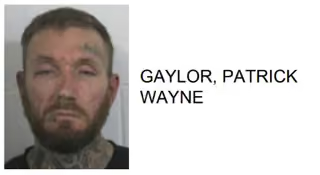
Patrick Wayne Gaylor, 40, was arrested on Maple Avenue near East 6th Street in Rome, Georgia, after police stopped his vehicle over an improperly restrained five-year-old child and found marijuana. He was charged with marijuana possession, a child safety restraint violation, and a parole violation.
Palo Alto County sheriff's deputies arrested 37-year-old Baley Dietrich and 18-year-old Landen Dietrich, both of Graettinger, after a disturbance call on the morning of 9 November 2026. Both were charged with first-offense marijuana possession and possession of drug paraphernalia and were booked into the Palo Alto County Jail to await initial appearances.