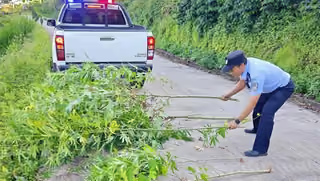
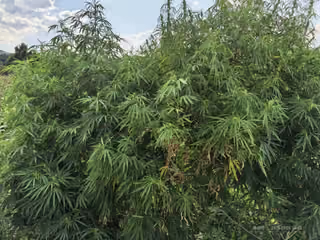
Qiaokuer border police clear more than 50,000 wild cannabis plants
Qiaokuer Border Police Station reported clearing more than 50,000 wild cannabis plants in a multi-day operation at the third company of a regiment in Ili. Officers also used cannabis samples to explain drug risks and laws to nearby residents.
🇨🇳 Ili Kazakh Autonomous Prefecture, Xinjiang · China
Qiaokuer Border Police Station of the Ili Border Management Detachment reported
that officers had cleared more than 50,000 wild cannabis plants in the days
before 22 June 2023.[1]The report describes a multi-day operation at the
third company of an unnamed regiment, where plants were growing beside several
unused courtyards.[1]
On 18 June, officers on routine patrol found plants they suspected were
cannabis and identified them by comparing them at the scene.[1]The station
organized officers to uproot and destroy the plants to prevent harm to people
working and living in the area.[1]
Officers later took samples to nearby residents and explained the types and
harms of drugs and the laws against illegal planting.[1]They urged residents
to report wild drug plants or suspected cultivation.[1]The report does not
give the regiment’s name, site area, plant weight or any arrest or charge.[1]
Case data
Every number and detail the sources state, with the sources that state it.
Nuoliang anti-drug workers uprooted more than 100 wild cannabis plants near a villager's fields in Cangyuan County after a resident tip. The workers found the patch during a follow-up carpet search and cleared all plants on the spot.
Officers from Junsai Police Station in Zhenkang County found multiple suspected drug plants beside a road and identified them as wild cannabis. Police uprooted and disposed of the plants; the reports gave no count.
After a resident reported unusual plants near a reservoir, police in Qujing's Xiaoxiang area confirmed and uprooted 23 wild cannabis plants. Officers said they destroyed the plants and searched the surrounding area again.
Police in Yunnan’s Yun County uprooted 54 wild cannabis plants in four township-level sweeps using drones, foot patrols and a school tip, then destroyed the plants on the spot. The county public security bureau said the work was part of ongoing ban-cultivation checks across Lincang prefecture.