Carabineros detained four people in the first of two weekend operations on Route 5 Norte in Canela.[1][2][3][4] The first Canela checks were carried out at kilometres 309 and 282 of Route 5 Norte during Friday dawn.[5][6][7][8][3] The four were an Ecuadorian aged 43, two Dominicans aged 28 and 37, and a Chilean aged 26.[1][5][2][6][9][7][3][4] Police said some of them acted as punta de lanza lookouts, driving in another vehicle to warn of checkpoints and ease the drug load through.[1][7][3] One of the four had a criminal record for drug trafficking.[1][3] On the prosecutor’s orders, the four faced a detention-control hearing on Saturday.[1][5][3] The court set a 70-day period for the investigation, with the four held in preventive prison during that stage.[10] The four were formalized as authors of illicit drug trafficking under Law 20,000.[10] On 7 November the Los Vilos court declared the detentions legal and ordered preventive prison for the four accused.[10]
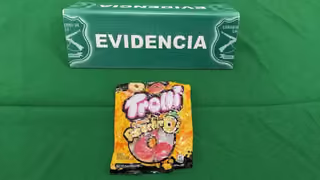
In Canela officers seized 83 packages of processed marijuana weighing 86 kilos 625 grams, along with a Suzuki Swift car, a Chevrolet N300 van, six mobile phones and more than $360,000 in cash.[1][5][6][9][7][8][3] Hours later, about a hundred kilometres south at kilometre 198 in Los Vilos, officers found a pickup carrying 377 packages weighing 398 kilos 360 grams, with a pistol and two cartridges inside.[1][6][4] The pickup found in Los Vilos had no outstanding theft report.[5][3] Together the two seizures totalled 484 kilos 985 grams, equal to 969,970 doses, which police valued at $3,879,880,000.[1][5][2][6][9][7][8][3][4]
The operations were carried out by the specialised OS7 Limarí unit with Carabineros highway units deployed on the road.[1][3] The operations were carried out in the framework of the 53rd anniversary of the OS7 anti-narcotics department.[4] Coquimbo zone chief General Christian Brebi said the deployments came from analysis work rather than random checks on the country’s main overland route.[1][3] He said the nearly 500 kilos were bound for central Chile, calling the result a blow to drug trafficking and organised crime.[1][3]