SWAT team holds Arlington farm residents at gunpoint in 10-hour raid; no marijuana found
A SWAT team spent about 10 hours searching the Garden of Eden, a 3.5-acre organic farm in Arlington, Texas, for marijuana on 2 August 2013, handcuffing the adults present at gunpoint. Police found no marijuana or other drugs, took away blackberry, okra and tomatillo plants, and arrested one resident on an unrelated outstanding warrant; residents later sued the city.
🇺🇸 Garden of Eden farm, 7325 Mansfield Cardinal Road, Arlington, Texas · Texas, United States
Arlington police stormed the Garden of Eden organic farm in south Arlington,
Texas, at around 7 a.m. on 2 August 2013.[1]More than 50 officers, armed with
military-style weapons, cut through the chain-link gate.[1]Most of the
residents were still asleep.[1]The officers rounded up and handcuffed all the
adults, including five visitors.[1]The ACLU said residents were held at
gunpoint for at least half an hour.[2]A guard stayed with a sleeping toddler
and newborn while officers took another resident downstairs.[1]The farm’s
account said all eight adults present were handcuffed at the gunpoint of heavily
armed SWAT officers.[3]NBC 5 reported that six adults lived at the farm.[4]One resident, 30-year-old Quinn Eaker, was arrested on an outstanding warrant
over unpaid parking tickets.[4]Police removed the handcuffs within about 30
minutes.[4]The residents said police did not show a warrant until two hours
after the raid began.[5]The raid lasted about 10 hours.[2]
Police had a search warrant for marijuana plants.[4]In June an anonymous
source told police Eaker was growing marijuana in a garden surrounded by bamboo.[4]On 30 July a Texas Department of Public Safety aircraft photographed the
garden, and an officer thought the plants looked like marijuana.[4]Eaker said
the plants police mistook for marijuana were likely tomatoes.[4]No marijuana
or other drugs were found.[1]Officers and city code inspectors instead took
away 17 blackberry bushes, 15 okra plants, 14 tomatillo plants, native grasses
and sunflowers.[2]A city abatement team then mowed part of the garden.[1]The farm covered 3.5 acres at 7325 Mansfield Cardinal Road.[6]
The residents demanded an apology from police.[4]They also sought
compensation for the damage done during the raid.[4]In July 2015 the owner
and four other members sued the city.[7]The case was filed in federal court
in Fort Worth.[8]The suit said police had no probable cause and based the
search largely on an anonymous tip and a flyover that spotted what looked like
marijuana plants.[8]The city said it was reviewing the lawsuit and that the
factual recitations appeared not wholly accurate.[8]The case was later stayed
pending the owner’s bankruptcy, and no outcome is reported.[7]The ACLU, then
running a 25-state investigation into police militarization, cited the raid as
an example of routine drug enforcement conducted like a war.[2]
Photos and video
NBC 5 video titled “Arlington Police Raid Farm Searching for Marijuana, Nothing Found”, showing the farm during the raid. Video: NBC 5 Dallas-Fort Worth Source: NBC 5 Dallas-Fort WorthPolice at the Garden of Eden farm in Arlington, in a photo from the farm's Facebook page published with CultureMap's account of the raid. Photo: Garden of Eden FacebookPhoto details
No marijuana was found, so there are no cannabis plant or weight figures for the raid.
Accounts differ on how many adults were at the farm: the farm's website said eight, while NBC 5 reported that six adults lived there.
The length of the operation is disputed: police said the tactical team left within 45 minutes, while the residents and the ACLU counted about 10 hours including the code search.
How long residents were held at gunpoint differs: police said handcuffs came off within 30 minutes, while the ACLU and the residents said at least half an hour.
The residents said the warrant was shown only two hours into the raid; police gave no separate account of when it was produced.
No cannabis charge was filed; the only arrest was on an outstanding warrant over unpaid parking tickets.
The full evidence behind the warrant was not released; reporting cites an anonymous tip and an aerial survey.
D Magazine gives a 7:30 a.m. start and Fort Worth Weekly around 7 a.m.
The federal lawsuit was stayed in 2016 pending the owner's bankruptcy, and no outcome was reported.
The farm's separate code-violation case and fines are only mentioned in passing; their outcome is not covered here.
The text gives a number of plants ("15 okra plants") but the figures have no plants_destroyed; check whether it belongs there.
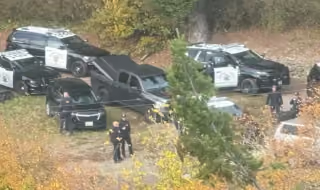
CHP's warrant service team searched a home in the 400 block of Bear Canyon Road northwest of Garberville on 9 November 2026 as part of a multi-agency narcotics investigation involving the DEA, HSI and FBI. The CHP said it did not lead the probe and would not confirm the target, the material officers shovelled, or any arrests.
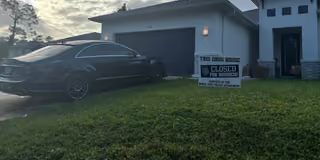
North Port police arrested Nicholas Eddy, 29, and Jessica Trach, 28, after their Special Investigations Unit searched a home on Narcissus Terrace and found marijuana packaged for sale along with cocaine, suspected LSD, steroids and pills. Both were accused of drug possession for sale, running a drug house and possessing drug paraphernalia.
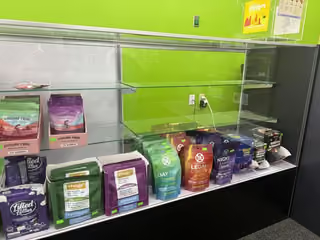
Lexington town police and state and federal partners searched five vape and hemp shops on 5 November 2026 in an undercover investigation into sales of illicit narcotics and drug paraphernalia. A shop owner says officers emptied cases, seized her phone and more than $3,300 in cash, and she plans to sue; no arrests were reported.
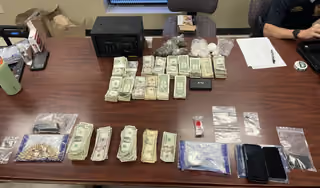
Four agencies served simultaneous search warrants at two Quincy addresses on 5 November 2026 in a drug-trafficking investigation, and police announced probable cause to arrest two men, one of them on a cannabis sale allegation. No drug quantities were disclosed and police did not confirm either man was in custody.