On 25 September 2000 the Philippine Supreme Court acquitted Abe Valdez y Dela Cruz, who had been sentenced to death for cultivating seven marijuana plants, ruling that the warrantless search was illegal and his admission inadmissible.[1][2] The court ordered him released immediately unless he was held for another lawful cause.[1][2]
The Regional Trial Court of Bayombong, Nueva Vizcaya, Branch 27, had found Valdez guilty on 18 February 1997 of violating Section 9 of the Dangerous Drugs Act and sentenced him to death by lethal injection.[1][2] The charge said that on or about 25 September 1996, at Sitio Bulan in Villaverde, he planted and cultured seven fully grown marijuana plants, known as Indian hemp, weighing 2.194 kilograms.[1][2]
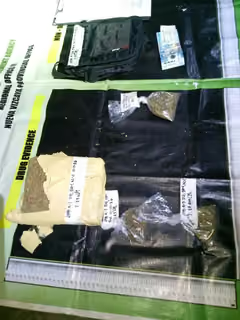
Acting on an unnamed informer’s tip received on 24 September 1996, the Villaverde police chief sent a five-man team with orders to uproot the plants and arrest the cultivator.[1][2] After a three-hour uphill trek starting at 5 a.m. the next day, the officers found Valdez alone in his nipa hut and spotted the seven five-foot-high flowering plants in two rows about 25 meters away.[1][2] They said Valdez admitted the plants were his, uprooted all seven, photographed him beside them and arrested him; a 1.09-kilogram sample sent to the police crime laboratory in Bayombong tested positive for marijuana.[1][2]
Valdez testified that an unknown person had led him to the plants about 100 meters from his hut, that five armed policemen forced him to pose there, and that an officer threatened him into admitting ownership.[1][2] He said the plot lay between his hut and that of a neighbour whose family held a grudge against him.[1][2]
Acquittal
The Supreme Court held there was no valid warrantless arrest before the search, so the plain-view doctrine could not apply: the team had been dispatched precisely to search for and uproot the plants, its discovery was not inadvertent, and the police had had time to get a warrant.[1][2] It ruled Valdez was already under custodial investigation when two armed officers interrogated him, so his uncounselled admission was inadmissible, and the plants seized in the unlawful search could not prove his guilt.[1][2]