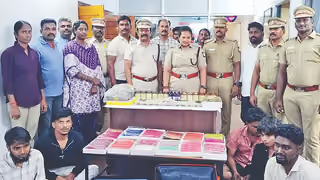
Udaipur police launched the ‘Ganja Mukt Mewar’ campaign to curb illegal cannabis cultivation, production and trafficking, combining destruction of illegal cultivation with seizure of traffickers’ property and action against the whole network.[1] The drive is being run on the directions of Udaipur Range Inspector General Gaurav Srivastava and the initiative of Superintendent of Police Dr Amrita Duhan to eliminate cultivation, production and transport in remote hilly and tribal-dominated areas.[1] Under the campaign police have so far registered seven cases under the Narcotic Drugs and Psychotropic Substances Act and seized 1,187 kg 490 g of ganja crop.[1] In the Mandwa police station area police registered seven cases under section 8/20, seizing 1,175 kg 640 g of illegal ganja crop and 11 kg 850 g of dry ganja for a total of 1,187 kg 490 g.[1]
On 17 November police seized 11.85 kg of dry ganja and 36.44 kg of ganja crop.[1] On 17 November police seized another 105.86 kg of ganja crop.[1] Additional Superintendent of Police Mukel Sharma chaired an interstate coordination meeting at the Kotra panchayat building with officers from the border stations of Kotra, Mandwa, Panarwa, Bekaria, Jhadol, Ogna and Falasia alongside Banaskantha police, the Narcotics Control Bureau, the Anti-Narcotics Task Force and administration, revenue and forest officials.[1] The two districts will appoint nodal officers to exchange information on those involved in illegal cultivation and trafficking, with blockades on main and alternative transport routes, joint police patrols and surprise raids.[1]
Police decided to use drones and satellite imagery to survey hidden cultivation in remote hills, forests and deserted areas, mark hotspots and destroy the crop with the forest and revenue departments, including eviction under Section 177 of the Rajasthan Tenancy Act 1955.[1] Action will extend beyond cultivators to the whole ganja network, with proposals to seize traffickers’ illegal property under section 68F of the NDPS Act and investigation of financial transactions from supplier to end buyer.[1] Police will also run de-addiction awareness as ‘Nasha Chhodo, Jeevan Jodo’ through community meetings and schools, telling villagers that cannabis cultivation and trafficking can bring rigorous imprisonment of 10 years or more and a fine up to 200,000 rupees.[1]