Rostov Mak-2026 destroys 271 patches of wild drug plants; 1.9 hectares
Police in Rostov Oblast reported destroying 271 patches of wild drug-containing plants covering 19,069 square metres in the regional operation Mak-2026, and issuing more than a hundred orders for landowners to clear such growth. Officers drew up 322 administrative offence reports, solved 159 drug crimes and seized about 35 kg of banned substances, of which 29,073 grams were of plant origin.
🇷🇺 Rostov Oblast · Russia
Area
1.9 ha
Sites
271
Agencies
ГУ МВД России по Ростовской области, Пограничное управление ФСБ России по Ростовской области
Police in Rostov Oblast reported destroying 271 patches of wild drug-containing
plants covering 19,069 square metres during the regional operation Mak-2026.[1]The operation’s stated aim was preventing crime in the trade in drugs of
natural origin, and the Don region is among the territories best suited to
growing drug-containing plants.[1]Besides the Rostov Oblast interior ministry
headquarters, the operation involved the FSB border directorate for the region,
the North Caucasus transport police, the Defence Ministry, Rosgvardia, the
Agriculture Ministry, Cossack organisations and regional authorities.[1]More
than 500 interior ministry officers went on duty every day during the
operation’s active phase.[1]
Officers issued more than a hundred official orders to destroy such patches, and
all were carried out on time.[1]Police drew up 322 administrative offence
reports and solved 159 drug crimes.[1]About 35 kg of banned substances were
taken out of circulation, of which 29,073 grams were of plant origin.[1]
The operation’s prevention work covered wild cannabis growing on vacant lots,
abandoned fields and household plots.[1]Some of those detained during the
operation were growers who kept plantations at their homes.[1]Growing
drug-containing plants on a large scale, from 20 cannabis plants, is a crime
under article 231 of the Russian Criminal Code, punishable by a fine of up to
300,000 roubles or up to two years in prison, and by up to eight years for a
group or on an especially large scale.[1]Landowners and land users must
destroy wild cannabis growing on their land themselves, and ignoring an official
order carries an administrative fine.[1]
The multi-agency operation in Rostov Oblast was reported completed on 27 October
2026.[2]
Photos and video
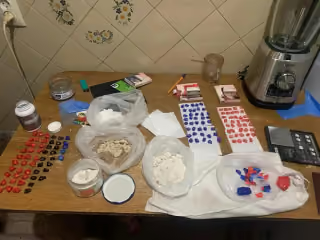
Police photograph published with the Rostov Oblast interior ministry's Mak-2026 operation results. Photo: MVD for Rostov OblastPhoto details
1rnd.ru1rnd.ruRUОт поля до уголовного дела: в Ростовской области прошла операция «МАК-2026»
Open questions the AI reported
The 271 patches and 19,069 square metres are reported for wild drug-containing plants without a species breakdown, and the sources do not separate cannabis from poppy or other plants.
About 35 kg of drugs were taken out of circulation, of which 29,073 grams were of plant origin; the sources do not separate cannabis from other plant-based drugs, so no weight is recorded for cannabis.
No figure was published for the number of people detained for cannabis cultivation during the operation, beyond the 159 drug crimes solved.
The sources give no date for the end of the reporting period; 27 October 2026, when the results were published, stands in for the incident date.
The Bataisk page also reports a 17-year-old accused over about three grams of an unnamed drug and a 27-year-old held with mephedrone; neither is established as a cannabis case and both are left out of this report.
The text gives a number of plants ("20 cannabis plants") but the figures have no plants_destroyed; check whether it belongs there.
The text gives a weight ("35 kg") but the figures have no kg_seized; check whether it belongs there.
The Tyvan government reported that 2,290.9 hectares of wild cannabis was destroyed across the Republic of Tyva during 2026, equal to 99.4% of the plan. The work was part of the region's anti-alcohol and anti-drug programme and cost the regional budget 2.93 million roubles.
After an inspection in Starokulatkinsky District, Ulyanovsk Oblast, prosecutors found that unmanaged wild cannabis was growing in the Zelenovsky rural settlement and that nobody had cleared it. The district prosecutor filed a formal demand to remedy the violations, and the cannabis was then destroyed.
Police and military security officials used armoured vehicles to destroy one hectare of wild cannabis in Vostochny, Oktyabrsky district, Amur Oblast, during the Priamurye without drugs operation. Police said tracked vehicles grind plants with their roots to prevent regrowth, after a similar September operation destroyed three hectares near Yekaterinoslavka.
Rosselkhoznadzor inspectors found nine wild cannabis sites covering 2,699 square metres on farmland in five districts of Novosibirsk Oblast during 2026. Landholders were warned to destroy the plants and the findings were passed to the Interior Ministry, with no destruction or arrests reported.