11 held in La Guajira raid on Tren de Aragua-tied network; 24 lb of marijuana seized
Colombian police and prosecutors arrested 11 Venezuelan nationals in a raid in rural Riohacha, La Guajira, on 9 March 2024, among them Carlos Antonio López Centeno, alias El Pilo, leader of Los Negritos del Monte. Officers seized 24 pounds (about 10.9 kilograms) of marijuana from a collection centre and an arsenal that included five rifles and an armoured pickup.
Police announced on 9 March 2024 that they had dismantled a Venezuelan drug
network operating in La Guajira, where it kept a marijuana collection centre for
moving the drug clandestinely into Venezuela.[1]The National Police and the
Attorney General’s Office’s CTI arrested 11 Venezuelan nationals in the raid in
rural Riohacha, La Guajira.[1]Among the 11 was Carlos Antonio López Centeno,
alias El Pilo, whom police described as the leader of Los Negritos del Monte, a
group dedicated to arms trafficking, narcotics and extortion and working with
the Tren de Aragua.[1]The detainees were linked to the Tren de Aragua, the
Venezuelan gang police say has been extending its drug trafficking into
Colombia.[2]
Officers seized24 pounds of marijuana, about 10.9 kilograms, in the operation.[1]Brigadier General Nicolás Alejandro Zapata Restrepo said the collection
centre could receive at least three tonnes of narcotics, which were dosed and
sent to Venezuela.[1]InSight Crime reported that investigators found the
group planned to collect three tonnes of marijuana for trafficking across the
border to Venezuela.[3]El Tiempo reported that the 11 were arrested in
flagrante in rural Riohacha and that officers seized five rifles, war material
and the 24 pounds of marijuana.[4]InSight Crime reported that police also
seized multiple weapons, grenades, an armoured vehicle and 10 kilograms of
marijuana.[3]
The 11 were being processed for trafficking, manufacture or possession of
narcotics and for manufacturing, trafficking and carrying firearms or
ammunition.[1]Police said the group ran microtrafficking in Riohacha and set
up drug collection centres for distribution to Central American countries.[1]El Pilo was one of Venezuela’s most wanted and faced two Venezuelan arrest
warrants, one for homicide and one for drug trafficking.[4]He identified
himself with two false identity cards when arrested, El Tiempo reported.[4]Police said the marijuana came from central Colombia, passed through Cesar to La
Guajira and then crossed into Venezuela.[1]
Photos and video
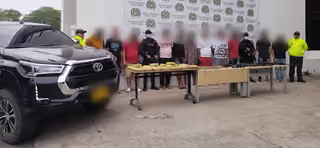
Police handout published with the raid announcement, captioned 'Los criminales producían marihuana en Colombia y la distribuían en Venezuela'. Photo: PolicíaPhoto details
Original
992 × 459 px · HEIF · 56 KB
SHA-256
e3a5107c40e5c3c1…
Retrieved
21 Nov 2026
Shown
our 320px copy; enlarging loads the original
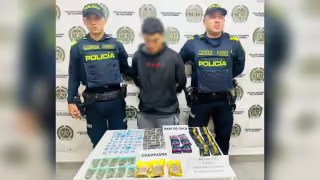
Source: InfobaePolice photo of the operation against the network, captioned 'La Policía desarticuló red de narcos venezolanos que trabajaba con el Tren de Aragua'. Photo: PolicíaPhoto details
Original
350 × 222 px · HEIF · 18 KB
SHA-256
32d7f53dc9d51a47…
Retrieved
21 Nov 2026
Shown
our 320px copy; enlarging loads the original
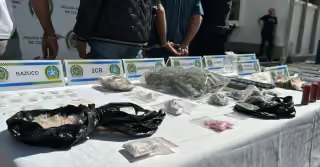
Source: InfobaeLong-range rifles and other weapons seized in the Riohacha raid, in a police handout captioned 'Fueron incautadas armas de largo alcance'. Photo: PolicíaPhoto details
El Tiempoeltiempo.comESEl temido líder de banda que cayó en Riohacha: era uno de los más buscados en Venezuela
Open questions the AI reported
No separate date is given for the raid itself; 9 March 2024 is the date of the police announcement in Infobae and the date InSight Crime gives for the arrests.
InSight Crime gives the marijuana seized as 10 kilograms, while the Colombian outlets report 24 pounds (about 10.9 kilograms); the report uses the Colombian figure.
Infobae calls Nicolás Alejandro Zapata Restrepo acting director general of the National Police, while El Tiempo calls him deputy director general.
The three tonnes are the collection centre's stated capacity, not a quantity seized in the raid.
No court outcome, detention measure or plea was reported; the 11 were still being processed.
The seized plant material is described as marijuana without a reported laboratory confirmation.
The exact location of the collection centre in rural Riohacha was not published.
Infobae, El Tiempo and Guajira News draw on the same National Police statement, so they are not fully independent accounts.
It is unclear whether the network grew marijuana or only collected and moved it; the reports describe a collection centre, not a plantation.
Left out, as its quotation was not found in El Tiempo: Police also seized a grenade launcher, five fragmentation grenades, 310 cartridges of 7.62 mm, 140 of 5.56 mm and an armoured pickup truck.
Police in Andes, Antioquia, arrested a man in flagrante during prevention and control checks on 21 November 2026 and seized 13 bags of marijuana. Officers also seized 135 doses of coca base, a separate substance excluded from the cannabis figures, and the detainee was held on suspicion of drug trafficking.
Bogotá metropolitan police seized more than 32 kg of marijuana at a pagadiario lodging house in La Favorita during an operation involving over 500 officers. Police valued the cannabis at about 25 million pesos, about 15,000 doses, and arrested one person, but for handling stolen goods rather than the drugs.
Police in Ibagué arrested two men, aged 25 and 30, in the barrio Villa María after finding 3,500 grams of marijuana in a basket on their motorcycle. Officers also seized a phone and 1,802,000 pesos, and left both men with the prosecutor.
Police in Manizales arrested three men during five searches in the Bajo Prado and Persia neighbourhoods, part of an investigation into drug dealing in the city. Officers seized 256 grams of marijuana along with cocaine, bazuco, ecstasy pills, ammunition and 296,000 pesos in cash, and placed the three at the disposal of the courts.