Six held as 2.07 kg of marijuana is seized in two Río Bueno road checks
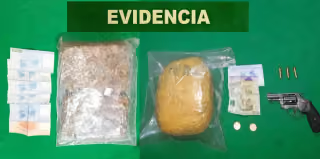
Carabineros detained six people in two vehicle checks on the Ruta T-85 in Río Bueno in the early hours of 18 November 2026 and found marijuana in both cars. OS7 field tests confirmed 2 kg 69 g of marijuana, and a 17-year-old detainee who handed over a revolver and three rounds was also held on a firearms charge.
Carabineros from the Diumén post, part of Río Bueno’s Fourth Commissary,
detained six people in two anti-drug procedures on the Ruta T-85.[1][2][3]The six detainees were four men and two women, all of Chilean nationality.[3]The first
check took place at about 01:30 at the Cachillahue junction, where officers
found 1 kg59 g of marijuana in a vehicle and detained its two occupants.[1][2]An hour later in the Pindaco sector, four occupants of a car were arrested after
officers found 1 kg10 g of the same substance.[1][2]One of the detainees, a
17-year-old girl, handed over a revolver and three unspent .38-calibre rounds
and was also detained for illegal possession of a firearm.[1][2]The prosecution ordered the Carabineros criminalistics laboratory, Labocar, to examine the seized firearm and ammunition to establish whether the weapon was capable of firing.[3]Specialist OS7
officers confirmed by field test that the marijuana seized came to 2 kg69 g.[1][2]The flagrancy unit of the Southern Austral Macrozona of the prosecution service directed the investigative steps.[3]On the duty prosecutor’s instruction the six accused were taken to a
detention-control hearing that morning, and the seizure of the vehicles, the
weapon and the ammunition was ordered.[1][2]The six detainees were to be placed at the disposal of the Juzgado de Letras y Garantía de Río Bueno during that day.[3]The Río Bueno commissioner, Major
Juan Cáceres, said Carabineros would keep reinforcing preventive patrols and
operations on the commune’s roads.[1]
The local outlet Noticias Río Bueno reported that two people were detained on
the Ruta T-85 at Cachillahue and four in Pindaco, for offences under the Ley de
Drogas and the Ley de Control de Armas.[4]The checks were made during
preventive patrols and each vehicle carried a kilo and a fraction, with the
firearm found in one of them.[4]The Public Prosecutor’s Office called in the
OS7 unit from Valdivia to carry out the field test on the drug.[4]Cáceres
said Carabineros would work day and night to stop people trafficking illicit
substances in the commune.[4]
Photos and video
Carabineros Los Ríos photo published with the report of the two Ruta T-85 vehicle checks in which six people were detained and 2 kg 69 g of marijuana seized. Photo: Carabineros Los RíosPhoto details
No street value was published for the 2 kg 69 g of marijuana.
The accounts reproduce official statements rather than independent reporting: the earlier outlets relied on Carabineros Major Juan Cáceres and this account draws on the Fiscalía Regional de Los Ríos.
No charges, plea or outcome of the detention-control hearing were reported.
No names or ages of the six detainees were published, apart from one being a 17-year-old girl.
The exact time of the second check is not given; it is described only as an hour after the first.
Noticias Los Ríos reverses the order of the two checks, placing Pindaco first and Cachillahue second, while the earlier accounts put Cachillahue first at about 01:30 and Pindaco an hour later.
Noticias Los Ríos gives only approximate preliminary weights of about one kilogram in each vehicle and about two kilograms in total, without the exact field-test figures of 1 kg 59 g and 1 kg 10 g.
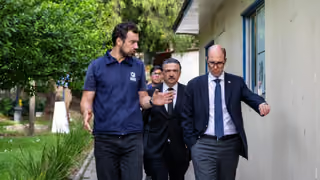
Four people were detained after bags of marijuana were found in their vehicle during an inspection operation in Maipú's main plaza on 18 November 2026, with a fifth person held over a clandestine casino. Public Security Minister Martín Arrau led the operation with Carabineros' OS-7 unit and municipal staff; officers seized 49 gaming machines and took 20 vehicles off the road.
PDI Arica's MT0 unit detained a Chilean man in flagrante on the city's coastal edge after finding him smoking a handmade cigarette in a vehicle at a drug sales point. Detectives seized eight bags of cannabis from the car and three packages from his home, more than three kilograms in total, and put him before the guarantee court for detention control and formalisation.
Carabineros officers stopped an intercity bus on Ruta 5 Sur in the Ñuble region, where the drug detection dog Napoleón alerted to controlled substances in a passenger's hand luggage and clothing. Officers detained the man, who has a criminal record, and seized about 400 doses of ketamine and marijuana together with more than 70,000 pesos in cash.
Investigators dismantled a band that moved drugs from the Metropolitan Region for distribution across Gran Concepción, detaining five people and seizing 3.7 kg of cannabis sativa and 3.2 kg of cocaine hydrochloride. Four were placed in pretrial detention after being charged with drug trafficking and related offences.