Environmental lawyer Ricky Stone is challenging the South African Police Service’s aerial spraying of dagga plantations around Port St Johns on behalf of Fields of Green For All, a pro-cannabis group, the Transkei Animal Welfare Initiative, the Amapondo Children’s Project and villagers affected by the spraying.[1] In January 2016, Stone asked the police to suspend the spraying at once while its effectiveness, appropriateness and compliance with local and international rules were independently reviewed.[1] He also sought proof that the spraying had complied with herbicide safety rules, with standards for aerial herbicide application, with agricultural law and with the Constitution.[1]
The South African Bureau of Standards rules require the public to be told about spraying in their area by notices posted at relevant sites, and police officials refused, saying this would undermine operations and put pilots at risk.[1] Lieutenant General E Mawela of the police told Stone the service would not give dates of planned law enforcement operations and knew of no country where police must warn offenders before an operation.[1] The chemical is glyphosate, marketed mainly as Roundup, which the World Health Organisation’s International Agency for Research on Cancer declared a probable carcinogen in 2015.[1] Police use a formulation called Kilo Max, whose label calls for elbow-length gloves, eye protection, waterproof clothing and impervious footwear when it is prepared, and immediate washing after skin contact.[1] Police said the spraying was lawful because glyphosate is registered under the Fertilisers, Farm Feeds, Agricultural Remedies and Stock Remedies Act, a 1947 law that a 2010 Department of Agriculture policy called outdated and said failed to protect residential areas, schools and hospitals from spraying.[1]
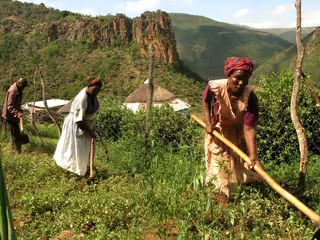
Stone’s requests for a temporary suspension were refused twice, and the groups planned to seek a court interdict against further spraying, which required them to work with tribal authorities and identify suitable communities to bring the application.[1] Luthando Dinwayo, chief of the Manhlaneni Tribal Council, said people in the area had grown dagga for generations and that spraying affected rivers and animals, and supported the efforts to stop it.[1] Cynthia, a 56-year-old grower whose name was changed, said she was sprayed with herbicide from a police helicopter in March 2014 while harvesting dagga, and that the chemicals burned and itched and left black marks on her body.[1] Another farmer in a different village said in video testimony filmed by spraying opponents that pilots sprayed him in 2015 after he raised his arms in surrender.[1]
Police said the aerial spraying lets them cover far larger areas than hand clearing, and the service reported spraying about 1,754 hectares in 2007-08.[1] No spraying had been reported in the region by mid-March 2016, the first time in more than two decades that Cynthia’s village had not been sprayed by then.[1]
Lawyers for the Transkei Animal Welfare Initiative, the Amapondo Children’s Project and Fields of Green For All wrote to the police on 7 January 2016 saying they would go to court if spraying went ahead without proper research into the chemicals’ environmental impact.[2]
The groups sought a written breakdown of the steps police were taking to comply with health regulations and a written undertaking that no operations would take place the following month.[2] The police replied that they would try to provide the information once a key official involved in the operation returned from sick leave.[2] Police priority crimes spokesman Brigadier Hangwani Mulaudzi denied the chemicals were harmful, saying Round-up was approved in South Africa and the European Union and applied according to its label, and that police would stop at nothing to destroy the plantations.[3]
Stone’s second letter, sent in mid-February 2016, asked through a Promotion of Access to Information request for proof that the spraying was environmentally compliant, as a step required before asking a court for an interdict and later damages.[3] Stone said the information sought would be used to formulate an interdict review and a later action for damages if no reply came.[3] The Daily Dispatch reported that spraying dagga plantations along the Mzintshana River near Port St Johns with glyphosate had gone on for at least 20 years.[3]