Two held in Poltava over 11 kg of cannabis smuggled from US
Poltava region police detained two men, aged 29 and 34, accused of importing cannabis from the United States in parcels and selling it through Telegram channels for cryptocurrency, and seized more than 11 kg in searches. Both were notified of suspicion and held in custody as part of the national Operation Espanyol.
Poltava region police detained two men, aged 29 and 34, accused of running a
cannabis smuggling scheme from the United States into Ukraine.[1][2]The
organiser ordered international parcels using invented recipients’ surnames to
hide the cargo from customs control.[3][2]The cannabis travelled on scheduled
buses and through postal services.[1][4][2]Searches of the men’s homes and a
basement recovered more than 11 kilograms of cannabis and confectionery
containing tetrahydrocannabinol.[1][2]The pair sold through specialised Telegram
channels with a network of dealers, and buyers paid in cryptocurrency.[1][2]In
October the organiser passed part of the cannabis to a 34-year-old acquaintance,
whose home was searched and who was also detained.[3][2]
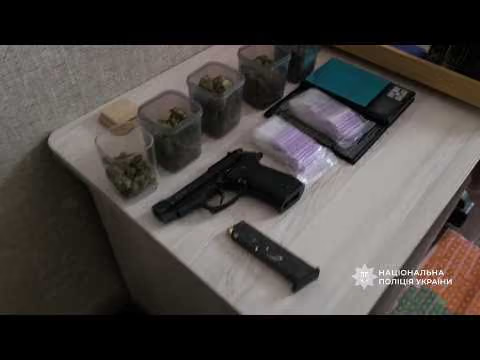
Police also seized weapons and ammunition, mobile phones, bank cards, electronic
scales, packaging material and handwritten notes.[1]The Poltava searches were
carried out by national and regional drug-crime officers, regional
investigators, Poltava district police and other units, backed by a
special-purpose police company.[1]Both men were notified of suspicion and a
court placed them in pre-trial detention.[1][4][2]According to their roles, they
are accused of smuggling and drug trafficking by an organised group under
Articles 305, 307 and 263 of Ukraine’s Criminal Code, and investigators say the
pre-trial investigation is continuing.[1]
The regional police said the arrests formed part of the international Operation
Espanyol, which the national police conducted across eleven regions to cut drug
channels from Spain, the United States and Portugal.[1][2]The charges carry
between nine and twelve years in prison with confiscation of property; no court
has given a verdict.[1][2]Two other Poltava residents, a 29-year-old man and a
27-year-old woman, were detained in the same operation on suspicion of posting
cocaine to customers across Ukraine.[3]Suspilne Poltava reported that four
people in the two Poltava groups were notified of suspicion.[4]
Suspilne Poltava reported that cash in national and foreign currencies worth more than 100,000 hryvnias in equivalent was seized in the searches of the two Poltava residents accused over cocaine.[4]
Photos and video
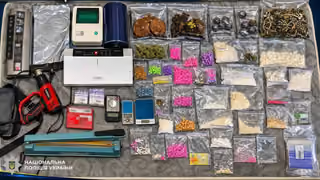
Photo captioned by the regional police as drugs seized during the searches in the Poltava cannabis case. Photo: Police of Poltava OblastPhoto details
Video report on the two Poltava groups and the seized cannabis and cocaine, published with Suspilne Poltava's account of the police statement. Video: Suspilne Poltava Source: Суспільне Полтава
Case data
Every number and detail the sources state, with the sources that state it.
The sources give no separate date for the searches and detentions; 6 November 2026, the publication date of the regional police release, Suspilne Poltava and the Poltava outlet, stands in as the incident date.
Only the region is named for the cannabis case; the sources give no district, town or village, so the place is recorded at region precision.
The exact weight above 11 kg and how much of it was seized from each of the two men are not stated; the submitted outlet alone reports more than 1.5 kg found at the 34-year-old's home.
No value was published for the 11 kg or the THC confectionery, so no value is recorded.
The suspects are identified only by age and no plea or court verdict has been reported; everyone is presumed innocent.
The penalty the charges carry is nine to twelve years with confiscation, not a sentence, so no prison term is recorded.
The cocaine, cash and weapons found with the second Poltava group belong to a separate case and are not counted as cannabis quantities here.
The submitted outlet gives no bail detail for the second group, while the regional police and Suspilne say the cocaine suspects were also placed in custody under Article 307.
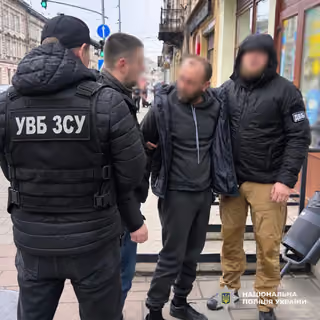
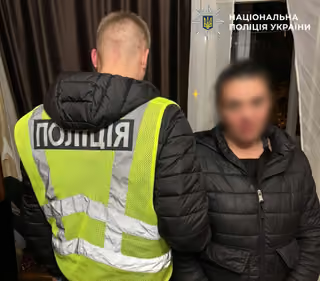
The regional police caption drugs each photograph only generically as drugs or officers at the scene, so it cannot be confirmed which photo shows cannabis rather than the cocaine case.
The regional police release speaks of eleven regions but lists Poltava Oblast among twelve named units including Kyiv city.
All accounts reproduce the regional police statement; no independent reporting of the searches was found.
The Suspilne page gives no separate date for the searches and detentions; 6 November 2026, its publication date, stands in as the incident date.
The cash of more than 100,000 hryvnias in equivalent was seized from the two Poltava residents accused over cocaine, not from the cannabis group, so it is not recorded as a cannabis figure.
The cocaine weight (about 200 g) and the THC confectionery belong to the same operation but are not counted as cannabis quantities.
The page gives no district, town or village for the searches, so the place remains at region precision.
The article reproduces the Poltava region police statement and contains no independent reporting.
The page's lead photograph carries only the generic caption “На Полтавщині викрили наркогрупу” with no credit, so it cannot be confirmed what it shows and no photo entry is added.
Police in Kyiv detained a 38-year-old man carrying 21 postal parcels with 100 grams of amphetamine, then found about 2.5 kilograms of prohibited substances in his flat, including cannabis and cookies with cannabis extract. He was notified of suspicion under part 3 of article 307 and a court ordered him held without bail.
Police in Kirovohrad Oblast searched the home of a 31-year-old man in Novoukrainskyi Raion and seized 500 grams of cannabis he was keeping for sale. He was detained and notified of suspicion under part 2 of article 307 of Ukraine's Criminal Code, which carries 6 to 10 years in prison.
Police detained three people, one a serving soldier, accused of growing cannabis in a greenhouse in Lviv Oblast, processing it and selling it in Lviv and the region, and said they seized about 15 kilograms worth some 4.5 million hryvnia on the black market. All three were notified of suspicion under Article 307 of the Criminal Code.
Police in Kyiv's Holosiivskyi district detained a 41-year-old woman they saw burying drug packages in a park and seized about 230 packages of drugs, including cannabis, alpha-PVP, MDMA, mephedrone and amphetamine. A court ordered her held without bail on suspicion of selling an especially dangerous psychotropic in especially large amounts, a charge carrying up to 12 years in prison.