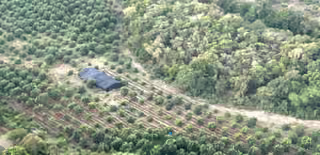
Dominican drug agents arrested two Haitian citizens and one Dominican during a raid on a farm in the El Pinar municipal district of San José de Ocoa.[1][2] The detainees remained under judicial custody in San José de Ocoa while investigators searched for other members of the alleged cultivation and trafficking network.[1][2] The DNCD later said the three people arrested in that first El Pinar case were under preventive detention.[3] The National Directorate for Drug Control carried out the El Pinar intervention with the Public Ministry, the Dominican Air Force and state intelligence agencies after intelligence reports identified the farm as an illegal growing site.[1][2] Officers carried out both an aerial and a ground intervention at the farm.[2] Diario Libre dated that intervention to the night of 7 June and the early hours of 8 June 2026.[4]
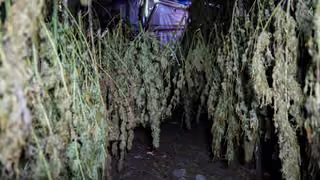
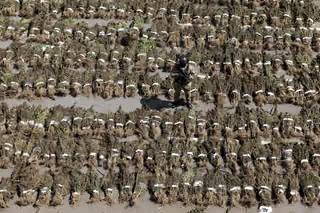
In less than four months the DNCD dismantled at least 4,835 marijuana plants in the southern provinces of Peravia and San José de Ocoa during 2026.[4] The earlier of the two operations found 1,835 plants in a hard-to-reach mountain area of Montería, Baní municipality, in February.[4] The later El Pinar operation found more than 3,000 plants in different germination stages, plus five jugs filled with harvested marijuana.[1][2] Agents also found a house fitted out as a collection centre for storing, drying and packing marijuana.[1][2] Inside they seized fans, a fumigation pump, cutters, solar panels, a voltage regulator, a motor pump, dryers, vacuum-packing bags, a communication radio, a cell phone and a motorcycle linked to production and handling.[1][2]
Prosecutors and agents spent more than 12 hours extracting plants and gathering evidence, carrying the seizures out on mules and horses because of difficult access.[1][2] The extracted plants were handed over under chain of custody to the National Institute of Forensic Sciences to count and analyse the quantity and total weight of the destroyed crop.[1][2] The Public Ministry and the DNCD kept a presence in the area to eradicate remaining crops and collect evidence for the ongoing judicial proceedings.[1]