Oregon law enforcement pulled up a record 245,000 marijuana plants in 2007, more than double the 120,000 taken the year before, the state Department of Justice said.[1] Don Nelson, who tracked the issue for the department, credited more flight time, more federal drug enforcement money and better shared intelligence, calling helicopters from the Oregon National Guard the backbone of the effort.[1]
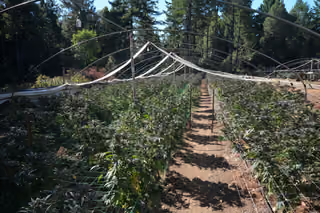
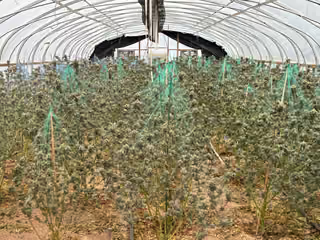
Growers adapted by planting under trees with no clear pattern, identifiable from the air only by a distinctive shade of green, and the usual May-to-October season was shortening as new seed matured in 90 days.[1] Plots were often booby-trapped and guarded by armed minders; hunters sometimes stumbled onto them.[1] In September, 18 agents raiding a site near Glendale in Douglas County expected 4,000 plants and found about 10,000 weighing four tons, with its own irrigation system, deer nets and booby traps, but the minders had fled.[1]
Those tending the plots were often undocumented immigrants, and about 30 were turned over to federal authorities during the year, with more possibly held in county jails.[1] A summer raid in Jackson County netted 32,000 plants and 22-year-old Jose Guadeloupe Gomez-Gonzalez, who claimed he was paid $1,500 a day to tend them.[1] County Sheriff Mike Winters blamed Mexican cartels for most of the growing, saying that planting 100 gardens and losing half still left a large profit, and that cuts to the State Police had turned Interstate 5 into a pipeline for marijuana.[1]
A later federal analysis confirmed 2007 as the highest eradication level ever recorded in the region’s enforcement area, with outdoor eradication there rising from 29,291 plants in 2005 to 109,160 in 2007 and indoor eradication from 5,058 to 12,239 plants.[2] Statewide, that analysis counted 262,013 plants eradicated in 2007, with 121,399 of them, about 46 percent, in the enforcement area’s counties.[2]