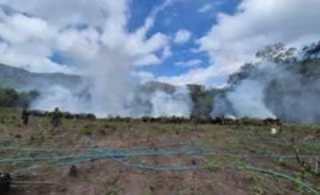
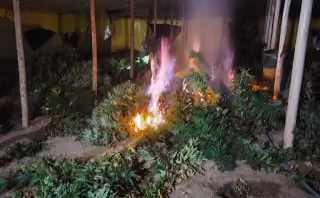
Bolivian anti-drug forces destroyed 20 marijuana nurseries in Lagunillas, in Rafael Bustillos province, northern Potosí, in an operation before dawn on 19 January 2026. The deputy ministry for controlled substances valued the crop destroyed at 10.7 million dollars and reported that local residents set off dynamite during the burning.
🇧🇴 Lagunillas, Rafael Bustillos province, Potosí · Bolivia
Bolivia’s anti-drug forces destroyed 20 marijuana nurseries near the community
of Lagunillas, in Rafael Bustillos province, northern Potosí department, the
deputy ministry for controlled substances (Viceministerio de Sustancias
Controladas) reported.[1]The operation was carried out in the early hours of
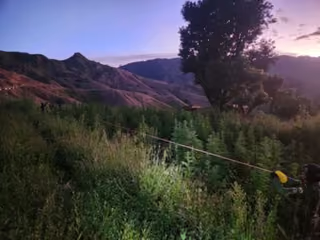
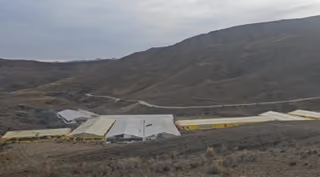
Monday 19 January 2026.[1]Officers reached the site along a bridle path and
found sophisticated irrigation machinery in the nurseries.[1]
Each nursery covered about 700 square metres, a total of roughly 1.4 hectares,
with marijuana plants up to three metres tall at four plants per square metre.[1]The deputy ministry calculated each nursery’s potential at 11.9 tonnes, a
total of 238 tonnes of marijuana destroyed, of which 71.4 tonnes were the net
weight in its natural state before processing for trafficking.[1]The deputy
ministry put the economic damage to drug trafficking at 10.7 million dollars.[1]
The whole plantation was incinerated, with the Public Prosecutor’s Office
present, and during the burning local residents set off dynamite near the
intervention area.[1]The deputy ministry said more than 60 active nurseries,
many with advanced irrigation and high yields, had already been recorded in the
same region in 2025, which it said suggested a consolidated criminal
organisation rooted in national drug-trafficking circuits.[1]
Photos and video
Photo published with the report on the destroyed nurseries, captioned only that the intervention was carried out at dawn. Photo: Viceministerio de Sustancias Controladas (VDSSC)Photo details
Every number and detail the sources state, with the sources that state it.
Plants destroyed
56,000
Area
1.4 ha
Cannabis
71.4 t
Value (official estimate)
USD 10,700,000
Agency
Viceministerio de Sustancias Controladas
Agency type
Anti-narcotics agency, Prosecutor
Activity
Cultivation, Trafficking
Setting
Field
Grown
Outdoor
Case stage
Under investigation
Region
Potosí
Sources
Erbolerbol.com.boESDestruyen plantaciones de marihuana en el norte potosino y afectan $us10 millones al narcotráfico
Open questions the AI reported
No arrests were reported; the account says residents set off dynamite during the burning but does not say whether anyone was hurt or whether suspects were identified.
The source gives no explicit plant count; 56,000 plants is calculated from the stated 20 nurseries of 700 square metres at four plants per square metre.
The 238 tonnes and 71.4 tonnes are the deputy ministry's estimates of potential production, not weighed harvests; the figure stored is the 71.4 tonnes of net natural-state weight.
The same region was described as having had more than 60 active nurseries in 2025, but the article does not tie this operation to a named criminal organisation.
Only the Erbol account was accessible; no agency statement or second outlet could be opened.
The page photo is credited only to the deputy ministry with the caption that the intervention was carried out at dawn.
Bolivia's anti-drug force FELCN found dried marijuana and standing cannabis plants at La Angostura, in El Torno, Santa Cruz, and burned more than 90 tonnes. The published accounts name no arrests and give no separate date for the operation.
Prosecutors and FELCN burned 36 irrigated greenhouses of cannabis near Laguna Lagunillas, in Machacamarca, Potosí, on the night of 11 March. The Oruro prosecutor put the plants at about 12,600 kilograms.
On 3 March 2026 Bolivia's FELCN eradicated about 25 tonnes of raw marijuana on 3.75 hectares at Mojón K'asa near Toro Toro, burned an artisan processing lab with washing machines and tanks, and found no one to arrest after traffickers fled.
Bolivia's FELCN found and incinerated 63 marijuana nurseries holding an estimated 14.5 tonnes in the Lagunillas highlands near Llallagua, Potosí, in what the government minister called a historic first planned entry into the area.