Customs seize 1,230 cannabis seedlings from Austria in van on A3
Customs officers of the Regensburg main customs office seized 1,230 cannabis plants from a Slovak-registered van on the A3 near Hunderdorf on 2 November 2026. The plants came from Austria in 13 parcels; the driver and passenger were let go after checks but face proceedings sent to the Regensburg prosecutor.
🇩🇪 A 3 near Hunderdorf, Straubing-Bogen district, Bavaria · Germany
Customs officers of the Furth im Wald traffic control unit of the Regensburg main customs office seized
1,230 cannabis plants on the A3 near Hunderdorf on 2 November 2026[1][2][3][4][5], and published two
photographs of them.[6]The plants had been carried from Austria into Germany in a small van.[1]
During the check of the Slovak-registered van the two men said they were carrying postal parcels from
Austria to Germany for a logistics company.[1][7][3][5]On the load bed officers found several parcels
wrapped in black foil addressed to recipients in Germany, and 13 boxes held 1,230 young cannabis plants.[1][7][3][5]The two men said they did not know what the parcels contained and showed a loading list and a
lawyer’s letter saying the transport was permitted.[1][7][4][5]
Seedlings, not cuttings
Customs judged the plants by their actual stage of growth: they had been planted in soil and grown into
independent young plants, so officers classed them as seedlings (Setzlinge), which count as cannabis
plants.[1][5]A cutting (Steckling), a shoot without flowers or fruit, counts under the Cannabis
Consumption Act as propagation material, but once planted and growing on its own it becomes a seedling;
the label in a shop, an order or on a parcel does not decide this.[2]Importing seedlings into Germany
is banned even from another EU state and whatever the number[1][2][5]; the rules letting adults grow three
plants at home do not allow ordering plants from abroad, and customs may check consignments from other EU
states because some bans remain despite free movement of goods.[2][5]
Customs opened criminal proceedings against the driver and his passenger[1][3][6][5]on suspicion of a
breach of the Cannabis Consumption Act together with Bannbruch, the customs offence of evading import
bans.[1][3]The two men were then allowed to continue their journey, and the case was referred to the
Regensburg public prosecutor’s office.[1][7][4][5]
Photos and video
Customs photo captioned 'Sichergestellte Cannabispflanzen in ihrer Versandverpackung' (seized cannabis plants in their shipping packaging). Photo: Hauptzollamt RegensburgPhoto details
Source: Presseportal / Hauptzollamt RegensburgCustoms handout photo captioned Cannabissetzlinge, published with the Regensburger Nachrichten account of the A3 seizure. Photo: Hauptzollamt Regensburg / KamerafotoPhoto details
Original
1920 × 1080 px · JPEG · 380 KB
SHA-256
42e410d30ebb1a25…
Retrieved
9 Nov 2026
Shown
our 320px copy; enlarging loads the original
Source: Regensburger NachrichtenCustoms handout photo of the seized cannabis seedlings in their shipping packaging, captioned in German as plants whose stage of development makes them seedlings. Photo: Zoll RegensburgPhoto details
Original
951 × 634 px · WEBP · 108 KB
SHA-256
5bec4bfdf677edf8…
Retrieved
9 Nov 2026
Shown
our 320px copy; enlarging loads the original
Source: TAG24Customs graphic explaining that a cutting planted and grown on becomes a seedling, a cannabis plant that may not be imported into Germany, published with the A3 seizure report. Photo: Zoll RegensburgPhoto details
Original
951 × 634 px · WEBP · 56 KB
SHA-256
b12f94946356668f…
Retrieved
9 Nov 2026
Shown
our 320px copy; enlarging loads the original
Source: TAG24Four of the 1,230 cannabis plants seized near Hunderdorf, already rooted in soil and so classed as seedlings. Photo: Hauptzollamt RegensburgPhoto details
verbotene Einfuhr von Cannabis (Violation of the Cannabis Consumption Act in conjunction with Bannbruch)
Case stage
Under investigation
Force
No force reported
Region
Bavaria
Route
Austria → Germany
Sources
Presseportal / Hauptzollamt Regensburgpresseportal.deDEHZA-R: Zoll stellt erneut zahlreiche Cannabispflanzen aus Österreich sicher - Zoll aus Furth im Wald stoppt Transport von 1.230 Cannabissetzlingen auf der A3
Wochenblatt.dewochenblatt.deDE13 Kartons aus Österreich: Zoll stellt auf der A3 bei Hunderdorf 1230 Cannabispflanzen sicher
Open questions the AI reported
Customs does not state the driver's or passenger's nationality, only that their van was Slovak-registered and had carried the parcels from Austria.
The release recommends no arrest: the two men were allowed to continue their journey, and no detention, charges before a court or outcome is reported.
The case was still with the Regensburg public prosecutor's office, and whether the Austrian sender or the German recipients face proceedings as in the separate August parcel case is not reported.
No weight, street value or field area is given; the plants were seedlings counted by number only.
No independent media account of this check was accessible, so the report rests on the customs office's release and its two handout photographs.
The release does not give the exact place of the check beyond 'on the A3 near Hunderdorf', so the coordinates of Hunderdorf are used with district precision.
The plants were seized rather than destroyed; destruction is not reported in this release.
The Regensburger Nachrichten version credits the text to Hauptzollamt Regensburg / RNRed and reproduces the customs release already cited, so it is not independent reporting.
The page does not give the nationality of the two men, only that the van was Slovak-registered and had come from Austria.
Wochenblatt.de reports the check took place on "Monday of last week" and does not give the calendar date; the reported date of 2 November comes from the customs release already cited.
The Wochenblatt.de account is a regional Passauer Neue Presse title and largely reproduces the customs office's release, so it is not independent reporting.
TAG24 does not say where the two men are from or whether they were detained, as in the report's existing account.
TAG24 republishes the customs office's handout photographs credited to Zoll Regensburg, so it adds no independent account of the check.
TAG24 credits the customs unit to Zoll Regensburg and names it as Kontrolleinheit Verkehrswege Furth im Wald, consistent with the report's attribution to the Regensburg main customs office.
The Oberpfalz-Aktuell page appears to reproduce the Regensburg main customs office's release, so it is not independent reporting of the check.
The Passauer Neue Presse text is a regional title of the same publishing group as Wochenblatt.de and reproduces the customs office's release, so it is not independent reporting of the check.
The page dates the check only to "Monday of last week"; the 2 November date comes from the customs release already cited.
Left out, as its quotation was not found in Passauer Neue Presse (pnp.de): Customs officers of the Furth im Wald traffic control unit of the Regensburg main customs office seized 1,230 cannabis plants on the A3 near Hunderdorf on 2 November 2026.
The TVA Ostbayern page is credited to dpa and appears to restate the customs office's release, so it is not independent reporting of the check.
The page gives no nationality or place of origin for the two men, only that their van was Slovak-registered and had carried the parcels from Austria.
Duisburg police stopped two men, 38 and 59, selling cocaine and cannabis from a parked Mercedes in Mittelmeiderich on 9 November 2026 after a witness tip. Officers seized drugs, phones and cash, searched both homes and opened trafficking proceedings; no drug weights were published.
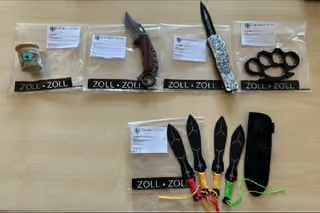
On the A6 near Bad Rappenau, customs officers found just under three grams of marijuana and several banned weapons in a car with Czech plates and opened a criminal case against its 29-year-old driver. He was handed to the Weinsberg traffic police after a rapid drug test indicated he may have been driving under the influence.
Border police on the A 3 motorway near Passau found a small amount of marijuana on a 23-year-old Romanian passenger during a check of a car travelling from the Netherlands to Romania. Officers seized the cannabis and opened an investigation against the woman because taking cannabis into and out of Germany remains punishable, then let both travellers continue.
Police, customs, public-order and foreigners-authority officers checking takeaways, restaurants and bars in Gütersloh on 7 November 2026 seized all the CBD products found for sale and stored in a city-centre kiosk. No quantity was given, and the other findings in the checks concerned vermin, undeclared staff and licensing breaches.