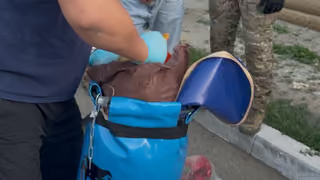
Kazakh farmer jailed 7 years over 233 cannabis bushes worth 49 kg
District Court No 2 of the Enbekshikazakh District in the Almaty Region sentenced a local man, identified as citizen Sh, to 7 years in a medium-security facility for growing cannabis plants on peasant farm land. Officers had found 233 bushes hidden among corn in August 2025, and an expert examination put their mass at more than 49 kilograms.
🇰🇿 Enbekshikazakh District, Almaty Region · Kazakhstan
District Court No 2 of the Enbekshikazakh District in the Almaty Region found
citizen Sh guilty of illegally planting and growing narcotic-containing plants
on an especially large scale.[1]The court found that in spring 2025 he
illegally planted and grew cannabis plants on the land of a peasant farm in the
Enbekshikazakh District.[2]Officers found the 233 cannabis bushes hidden
among rows of corn during a special operation by the Interior Ministry’s
drug-crime department together with the National Security Committee.[3]In
August 2025, during a special operation by National Security Committee and
Almaty Region police officers, a 36-year-old local resident was detained.[4]On a plot of 4.5 hectares among the corn, police found the 233 cannabis bushes
and seized 58 test tubes of marijuana seeds from a makeshift hut.[4]
Police seized 233 narcotic-containing bushes during the investigative actions.[1]The police report identified the field as belonging to a 36-year-old local
resident, who was detained and taken to the Shelek police station, where a
criminal case was opened.[3]A forensic examination identified the seized
plants as the narcotic cannabis with a total mass of more than 49 kilograms, a
specially large amount.[2]
At trial the defendant fully admitted guilt and repented.[1]His guilt was
confirmed by the case evidence, including records of the scene inspection,
expert findings and witness testimony.[1]The court qualified his actions
under point 2 of part 3 of Article 300 of Kazakhstan’s Criminal Code, illegal
planting and growing of prohibited narcotic-containing plants on an especially
large scale.[1]
Taking account of the nature of the crime and mitigating circumstances, the
court sentenced him to 7 years’ imprisonment in a medium-security penal
institution.[1]The court also ordered him to pay the procedural costs of the
expert examinations and a compulsory payment to the Victims’ Compensation Fund,
and ordered the physical evidence destroyed.[1]The verdict had not entered
into legal force and could be appealed through the established procedure.[1]
Case data
Every number and detail the sources state, with the sources that state it.
Arrested
1
Charged
1
Plants destroyed
233
Cannabis
49 kg
Prison
7 years
Agency type
Police, Court
Cannabis
Herbal cannabis (49 kg); Living plants (233 plants)
Kazinforminform.kzRUКонопля среди кукурузы: жителя Алматинской области осудили на 7 лет
Open questions the AI reported
No separate sentencing date was published, so 16 February 2026, the publication date of the sentence accounts, is used as the incident date.
No date in August 2025 was given for the detention and the discovery of the plantation.
The weight is stated only as more than 49 kilograms, so 49 kilograms is recorded as the supported lower bound.
The convicted person is identified only as citizen Sh, with no full name published.
The 2025 police account describes a 36-year-old detainee while the sentence accounts name only citizen Sh; the match rests on the same district, 233 bushes and 49 kilograms.
The 4.5-hectare figure is the area of the farm plot named in the August 2025 reporting, not a measured area of the cannabis crop, so it is not recorded as destroyed field area.
Kazinform attributes the discovery to National Security Committee and Almaty Region police officers, while Tengrinews names the Interior Ministry's drug-crime department with the National Security Committee.
No appeal outcome was reported because the verdict had not entered into legal force when the sentence was announced.
The text gives an area ("4.5 hectares") but the figures have no hectares; check whether it belongs there.
A court in Aktobe sentenced a 43-year-old man from the town of Shu to six years in prison for storing and selling marijuana, after he tried to sell 100 kilograms to an undercover KNB officer for 13 million tenge. In court he said he had found the bags beside the Aktobe-Atyrau highway and drove them into the city to pay off debts.
Court No. 2 in Kostanay sentenced 29-year-old Aleksandr Nerush to seven years in a medium-security facility for transporting and storing marijuana with intent to sell. He hid three packets of marijuana inside a punching bag bought in Almaty and carried it to Kostanay.
A specialised court in Uralsk fined a convoy-unit police sergeant 173,000 tenge after a medical check found cannabinoids and he admitted using marijuana. The West Kazakhstan regional court said the ruling had not yet entered into force.
Bayzak District Court sentenced a Zhambyl police lieutenant colonel and UBOP operative to seven years, reduced to four years and eight months under amnesty, for keeping more than 2 kg of hashish at his workplace. Officers of the regional National Security Committee department detained him, and the court also stripped him of his rank.
Arrested 1Sentenced 1Cannabis 2 kgPrison 4 years and 8 months