Cuba reports 4,462 kg of marijuana from 2017 drug wash-ups on its coasts
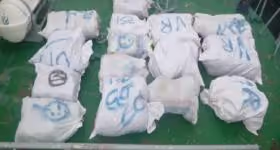
Cuban authorities seized more than 4.7 tonnes of drugs between January and October 2017, most of it marijuana from shipments that washed ashore. Operation Aché III recorded 244 wash-up incidents carrying 4,462 kg of marijuana and 109 kg of cocaine, a total the government said exceeded 2015 and 2016.
🇨🇺 Cuba
Cannabis
4.462 t
Agencies
Fuerzas Armadas Revolucionarias (FAR), Ministerio del Interior (MININT)
Cuban authorities seized more than 4.7 tonnes of drugs between January and
October 2017, most of it marijuana from shipments that washed ashore on the
island’s coasts.[1]The official newspaper Granma said the total exceeded all
the drugs seized in 2015 and in 2016, attributing the rise to Cuba’s place on
global trafficking routes and to higher production, supply and consumption.[1]Diario de Cuba reported that marijuana wash-ups predominated in 2017 and that
finds of cocaine packages declined.[2]
The maritime figures came from Operation Aché III, in which members of the
Revolutionary Armed Forces and the Interior Ministry watch Cuba’s jurisdictional
waters for drug trafficking.[1]By the end of October the operation had
confronted 244 wash-up incidents carrying 4,571 kg of drugs, of which 4,462 kg
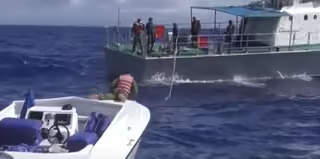
was marijuana and 109 kg cocaine.[1]Its personnel sighted 63 speedboats
suspected of involvement in drug trafficking.[1]The worst-hit areas were the
eastern provinces of Granma and Guantánamo and the southern coast from Pinar del
Río to Camagüey, including the Isla de la Juventud.[1]Cuban nationals were
detained in the wash-up cases that were clarified.[1]About 97% of drug
movement in the Caribbean goes by sea, mostly in speedboats passing near Cuban
waters.[1]Cuban authorities told Granma that tighter regional anti-drug
controls, together with sea currents, push shipments onto the island’s coasts.[1]
At the air border, 43 international trafficking operations were foiled,
foreigners were detained and 55 kg of drugs were seized.[1]Havana’s José
Martí International Airport was the busiest point for these cases, followed by
the airports of Matanzas and Holguín.[1]Authorities also detected 46 cases of
foreigners carrying small amounts of drugs for personal use, withdrew the
substances and fined them.[1]Granma named medicine misuse and marijuana grown
in remote areas as the main domestic problems in the fight against drugs.[1]The UNODC’s 2017 World Drug Report said trafficking routes were changing and
diversifying at an alarming rate, requiring stronger controls at the maritime
border.[1]
Case data
Every number and detail the sources state, with the sources that state it.
Cannabis
4.462 t
Agencies
Fuerzas Armadas Revolucionarias (FAR); Ministerio del Interior (MININT)
No date is given for any individual seizure; 22 November 2017 is the publication date used as the report's date, and the figures cover January to October 2017.
No cannabis-only total for the whole year was published: the 4.7-tonne figure covers all drugs, so only the 4,462 kg of marijuana from maritime wash-ups is recorded as cannabis.
Officials also reported 43 kg of drugs, including 40 kg of marijuana, from medicine misuse and crops in remote areas, without saying whether those amounts are counted in the wash-up figures; they are not added to the cannabis total.
The reported subtotals of 4,571 kg from wash-ups, 55 kg at the air border and 43 kg inside the island do not add up to the 4.7-tonne (4,787 kg) total, and the sources do not explain the difference.
The 109 kg of cocaine and the other drug quantities seized at the air border and inside the island are outside the cannabis figures.
No figure was published for the number of people detained in the clarified wash-up cases or at the air border, and those detentions cover drug cases generally, not cannabis alone.
No monetary value, charges or court outcomes were reported for any of the seizures.
The two accounts disagree on the shipments' destination: Martí Noticias says the washed-up consignments were bound for the island, while Diario de Cuba quotes Granma saying they were not.
The figures rest on the government's account published in the official newspaper Granma, with no separate police, customs or laboratory data.
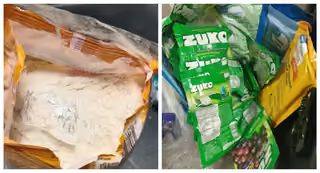
Cuban customs seized packages of marijuana hidden among cereal boxes and other food products at Havana's José Martí International Airport, in an operation announced on 26 January 2026. No quantity was published and no arrests were reported; officials did not confirm the drug's origin, though the packaging and a luggage tag pointed to Mexico.
Agents of Cuba's Interior Ministry seized more than 500 marijuana plants in the Matías area of Tercer Frente, Santiago de Cuba, and detained several people tending the crop. The pro-government Facebook profile Héroes del Moncada, which reported the operation, said the detainees would be judged with all the weight of the law.
Cuban Border Guard Troops and the US Coast Guard seized 17 containers holding 340.7 kilograms of marijuana off Banes, Holguín province, after a tip from Miami. US authorities detained the two people who fled in the speedboat, and Cuban border troops took over the investigation.
Cuban border guards seized around a tonne of marijuana from a speedboat intercepted off Maisí, Guantánamo, detaining its three Bahamian crew. Authorities said the shipment was moving through the Windward Passage toward the Bahamas and the United States market.