62-country Orion campaign seizes 164 tonnes of marijuana and 41 of hashish
Colombia's navy announced the 13th edition of its multinational Orion campaign, run over 45 days by 62 countries, with 744 people detained and more than 164 tonnes of marijuana and 41 tonnes of hashish seized. Brazilian and Paraguayan authorities also destroyed crops and storage sites, interrupting 1,689 tonnes of marijuana.
Colombia’s navy announced the results of the 13th edition of its multinational
Orion drug campaign.[1]Authorities detained 744 members of criminal
organisations during the campaign and handed them to the authorities.[1]The
campaign ran for 45 days with nine international organisations, 125 institutions
and 62 countries from five continents taking part.[2]Twenty more countries
joined than in the previous edition.[2]
Participating forces seized196 tonnes of cocaine, more than 164 tonnes of
marijuana and 41 tonnes of hashish.[2]The drugs were found in oceans, coastal
waters, rivers, island areas and port facilities on five continents.[2]In
Brazil and Paraguay, authorities eradicated crops and destroyed production and
storage centres, interrupting 1,689 tonnes of marijuana.[2]The campaign
destroyed 302 illegal structures used to extract and process alkaloids.[2]Forces intercepted 112 boats, 211 vehicles, nine semisubmersibles and five
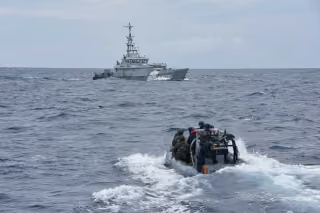
aircraft.[2]Two semisubmersibles were seized in Guyana, the first in the
campaign’s history, on intelligence from the Colombian navy.[2]The navy said
the results stopped criminal organisations from receiving more than $18.7
billion.[2]
The campaign has run since 2018 and is led by the Colombian navy.[3]This
edition consolidated the International Judicial Network Orion (REJIO), developed
with the UN Office on Drugs and Crime.[2]Prosecutors in Colombia, Panama and
Costa Rica shared information on four judicial cases through the network.[2]
Photos and video
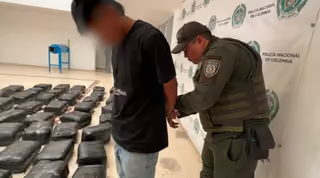
Seized narcotics from the 13th Orion campaign, in a Colombian Navy handout published with the campaign results. Photo: Armada de ColombiaPhoto details
The results were presented on or shortly before 3 July 2024; that date is the publication date of the earliest account used and no exact closing day for the 45 days of operations was published.
The more than 164 tonnes of marijuana and 41 tonnes of hashish are campaign-wide totals with no breakdown by country, sea or individual seizure.
The 1,689 tonnes of marijuana attributed to Brazil and Paraguay is described as production and stocks removed through crop eradication and the destruction of collection centres, not as a weight seized in one operation, and is counted as destroyed cannabis rather than seized.
The 744 detentions and the intercepted boats, vehicles, semisubmersibles and aircraft are totals for all criminal activity in the campaign, not cannabis-specific counts.
Admiral Francisco Cubides is quoted in one account as citing 162 tonnes of marijuana seized, while the navy's written figures and the other accounts say more than 164 tonnes; this report uses 164 tonnes.
No value estimate for the seized marijuana or hashish was published; the $18.7 billion figure is money the navy said criminal organisations were prevented from receiving.
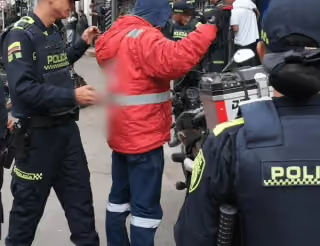
Bogotá metropolitan police seized more than 32 kg of marijuana at a pagadiario lodging house in La Favorita during an operation involving over 500 officers. Police valued the cannabis at about 25 million pesos, about 15,000 doses, and arrested one person, but for handling stolen goods rather than the drugs.
Colombian troops and criminal investigators raided a rural property at Matitas, Riohacha, in the early hours of 19 November 2026 and exchanged fire with people there, leaving one wounded. They captured a man and two women suspected of belonging to the Autodefensas Conquistadoras de la Sierra Nevada, rescued a minor and seized 490.5 grams of marijuana along with weapons and ammunition.
Antioquia traffic police found 8,492 doses of marijuana being shipped as a courier parcel inside a freight truck on 18 November 2026 and valued the haul at about 8 million pesos. The cargo went to the 41st local prosecutor's office in Santo Domingo to establish its origin, destination and who was responsible.
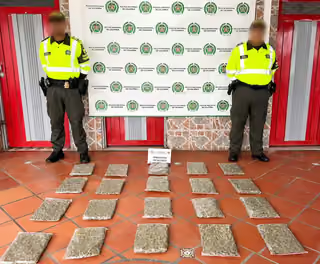
Police in El Tambo, Nariño, seized more than 310 kilograms of marijuana from a private vehicle on the road to Sandoná and arrested one man caught in the act. The load was believed bound for Ecuador and was preliminarily linked to the residual Franco Benavides armed group, police said.