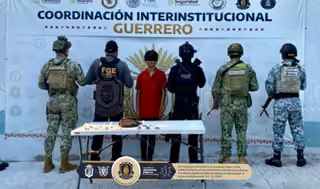
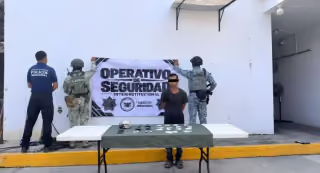
Mexico’s federal security secretary, Omar García Harfuch, announced on 13 January 2026 that six alleged members of the Venezuelan criminal organisation Tren de Aragua had been arrested in Mexico City.[1] The authorities linked the six to extortion, human trafficking and drug trafficking, including the distribution of narcotics in the capital.[1]
The federal security ministry said they were linked to extortion, human trafficking and drug trafficking, which are among the lines of investigation opened by the agencies in the operation.[2] Officers from the Defence Ministry, the Navy, the federal security ministry, the Mexico City security ministry, the attorney general’s office and the National Guard took part in the operations.[2] After fixed, mobile and discreet surveillance of buildings in colonia Valle Gómez, Venustiano Carranza, a control judge granted warrants and officers searched two homes.[2]
In those two searches officers detained five people, including one identified as Lesli Valeri N, described as the person who collected proceeds from sexual exploitation and controlled trafficked women.[2] The searches in Valle Gómez also turned up doses of methamphetamine and marijuana, mobile phones, a short firearm, cash and computer equipment.[2] The two searches in Valle Gómez yielded doses of methamphetamine and marijuana, cash, a short firearm, phones, computers and a notebook listing women from whom extortion payments were collected.[3]
In Iztapalapa, a separate arrest order was carried out against a man identified as Bryan N, described as the organisation’s financial operator, who already faced an arrest warrant for human trafficking and organised crime.[2] Bryan N was accused of providing properties to shelter trafficking victims and house gang members.[2] The federal security ministry said seven further arrest warrants for human trafficking and organised crime were served on people already held in prisons in Mexico City, Puebla and Nayarit.[3]
The six detainees and the seized items were handed to the Public Prosecutor’s Office, which was to decide their legal situation, and the searched properties were sealed and placed under police guard.[3]