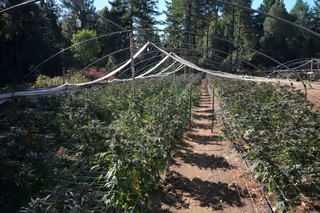
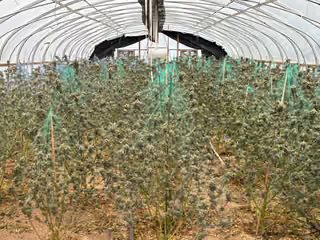
On November 16, 2026 Attorney General Rob Bonta announced that the Eradication and Prevention of Illicit Cannabis (EPIC) program eradicated nearly one million illegally cultivated cannabis plants and made 221 arrests across 22 California counties in 2026.[1][2][3][4][5][6] The results came from the state’s Eradication and Prevention of Illicit Cannabis (EPIC) program, which brings together local, state and federal law enforcement agencies.[7][2][4]
EPIC teams operating in Northern, Central, and Southern California conducted 655 operations, recovered 158 weapons, and removed infrastructure including dams, water lines, and containers of toxic chemicals.[1][2][3][4] Officials reported discovering several dangerous pesticides and chemicals at illegal grow sites, including carbofuran, methyl parathion, aluminum phosphate and zinc phosphide.[7] Carbofuran, an insecticide effectively banned in the United States, can contaminate soil and nearby water sources long after its application.[7]
Bonta said illegal cannabis cultivation is not a victimless crime, calling it a driving force behind human exploitation, illegal activity, and ecological devastation.[8][2][4] The operations also targeted criminal organizations involved in exploiting workers at remote cultivation sites, including cases involving forced labor and human trafficking, and officials reported rescuing vulnerable individuals without saying how many people were rescued.[7] The operations were conducted in Alameda, Butte, Fresno, Humboldt, Kern, Lake, Lassen, Los Angeles, Mariposa, Mendocino, Nevada, Riverside, Sacramento, San Benito, San Bernardino, San Joaquin, Shasta, Stanislaus, Tehama, Trinity, Tulare, and Yuba counties.[1][2][3]
Its operations are primarily funded through the Drug Enforcement Administration’s Domestic Cannabis Eradication/Suppression Program.[7][2] EPIC also investigates related environmental violations, financial crimes and labor exploitation, with cases potentially resulting in both civil and criminal prosecution.[7] Bonta’s office said the task force coordinates closely with the DOJ’s Cannabis Control Section, Special Prosecutions Section and Tax Recovery in the Underground Economy Task Force to prosecute operators.[2]