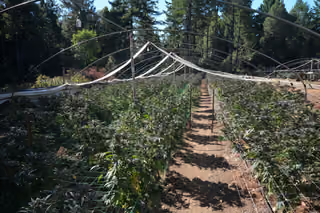
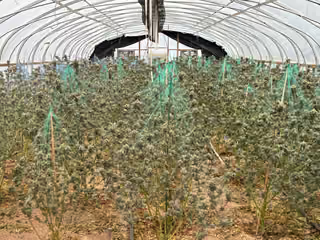
On 29 October 2002 Attorney General Bill Lockyer announced in Fresno that California’s Campaign Against Marijuana Planting had seized a record 354,164 marijuana plants during the 2002 season, worth more than $1.4 billion.[1][2] More than three million plants had been seized since the program began in 1983, with almost 1.3 million of them in just the last four seasons.[1]
Season totals
Officers from more than 70 agencies conducted 181 raids in 23 counties during the growing season from late July through early October, making 26 arrests and seizing 38 weapons.[1] The average raid took slightly under 2,000 plants, while eight gardens held more than 10,000 plants each.[1] Mendocino County led with 103,104 plants, followed by Sonoma, Santa Barbara, Tuolumne, Tulare and Fresno counties.[2]
About 56 percent of the plants, or 200,953, were found on public land, and some 40 percent came from the Emerald Triangle of Humboldt, Mendocino and Trinity counties plus other Northern California counties.[1][2] About 30 percent was seized in the Central Valley and 30 percent in the Bay Area and Central Coast regions.[1] The department said about 75 percent of the plants came from gardens tied to Mexican drug cartels also involved in methamphetamine and other narcotics.[1]
Danger on public land
Lockyer said large operations keep appearing in remote state and national forests, endangering hikers, campers and park rangers who meet garden tenders, usually immigrant recruits living for weeks in modest campsites, armed and ordered to defend the crop.[1] He credited the cooperation of federal, state and local agencies, including the US Forest Service and the California Highway Patrol, for the season.[1]