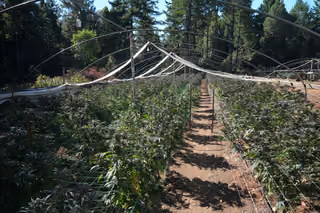
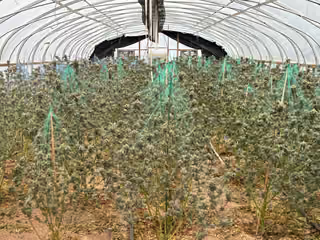
On 23 October 2000 Attorney General Bill Lockyer announced in Madera that California’s Campaign Against Marijuana Planting had seized 345,207 marijuana plants during the 2000 season, 43 percent more than the previous record of 241,164 set in 1999.[1][2] His office valued the removed crop at more than $1.3 billion.[1][2]
Season totals
Officers from more than 70 local, state and federal agencies, supervised by the Department of Justice Bureau of Narcotic Enforcement, conducted 263 raids in 25 counties from late July through mid-October.[1] They made 16 arrests and seized 24 weapons.[1] More than half the seizures were in Central Valley and Sierra foothill counties from Calaveras to Kern, with over 174,000 plants taken in Calaveras, Kern, Fresno, Madera, Merced, San Joaquin, Tulare and Tuolumne counties.[1]
The largest single raid in the program’s 18-year history took more than 59,000 plants worth over $230 million in Kern County, in the Sequoia National Forest.[1][2] No arrests were made in that Kern County find.[2] Lockyer said several raids uncovered operations of 8,000 to 15,000 plants run as corporate-style enterprises directed by Mexican drug organizations, unlike the traditional small gardens of a few hundred plants.[1]
Public-land danger
About 60 percent of the season’s seizures were on state or national forest land or other public ground, which Lockyer called dangerous for hikers, campers and hunters who could stumble on armed garden tenders ordered to defend the crop.[1] Investigators also found Mexican drug organizations making methamphetamine and using the profits to finance the more lucrative marijuana operations.[1] The seized marijuana was destroyed on site.[2]