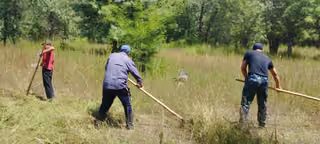
Police destroy 2.5 tonnes of wild cannabis in Batken Region
Police destroyed about 1.7 tonnes of wild cannabis on 1.5 hectares at Zar-Tash and burned about 800 kilograms after checking 3 hectares at Kyrgyz-Kyshtak in Batken Region. The two reported quantities total about 2.5 tonnes across 4.5 hectares.
🇰🇬 Zar-Tash village and Kyrgyz-Kyshtak village, Batken Region, Kyrgyzstan
On 10 July 2026, reports described two wild-cannabis destruction operations in
Batken Region.[1][2][3]At Zar-Tash, police checked 1.5 hectares and cut and
burned about 1.7 tonnes; at Kyrgyz-Kyshtak in Kadamjay District, officers
checked 3 hectares and burned about 800 kilograms.[1][2]
The reported quantities total about 2.5 tonnes across 4.5 hectares.[1]The
operations were part of the wider southern Kyrgyzstan eradication work described
in the reports.[1][3]
Case data
Every number and detail the sources state, with the sources that state it.
Area
4.5 ha
Cannabis
2.5 t
Agency type
Police
Activity
Cultivation
Setting
Forest or wild land
Grown
Wild
Sources
open.kgopen.kgRUНа юге Кыргызстана продолжают уничтожать дикорастущую коноплю
Jumgal district police, Naryn regional drug police and Min-Kush rural officials mowed and burned about 2.5 tonnes of wild cannabis on roughly 2 hectares at Marinka and Kindik. The operation was part of the Kara Kuura campaign.
Kyrgyz police said they mowed and burned more than two tonnes of wild cannabis in Osh Region during the second stage of the Kara Kuurai operation, which ran from 3 to 8 August 2026. The reports say officers searched about three hectares and planned to continue checks for wild plants on land, fields and homesteads.
Police in Jumgal district, Naryn Region, burned about 2 tonnes of wild-growing cannabis in a destruction campaign reported on 16 July 2026. The regional police department said the plants were found on the district's territory; no arrests were reported.
Kemin District police cut and burned about 1 tonne of wild cannabis across 0.5 hectare in the Chon-Kemin rural district of Chüy Region on 13 July 2026. Kabar reported the work as part of the Chüy regional police’s “Cannabis-2026” campaign.