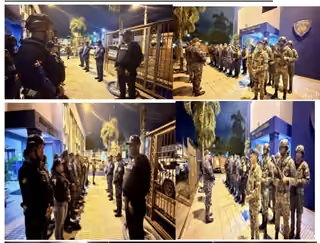
Agents of the DNCD, the Dominican Republic’s National Directorate for Drug Control, working with the Public Ministry prosecutors, arrested two men during operations in the Barranca sector of La Vega province.[1][2] The authorities described the detainees as alleged members of a drug sale and distribution structure in that area supposedly led by a man known as Carlitos Darielky.[1][2] Officers detained Luis Alberto Florimón Abreu, also known as Sepequeño and Niño, in one of the procedures.[1][2] Officers arrested Luis Miguel Lora Canela in another action near the same sector and took from him a handmade firearm with a 9 mm cartridge.[1][2] After the procedures, both men were transferred and placed at the disposal of the Public Ministry with the seized substances and objects for legal proceedings.[1]
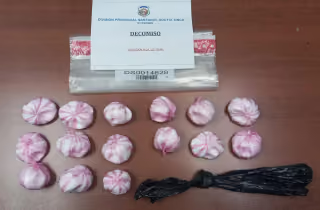
From Lora Canela officers recovered 56 wrappers of plant material appearing to be marijuana, estimated at 61.4 grams.[1][2] From the same man officers also reported 37 portions of suspected cocaine weighing about 244.3 grams, a non-cannabis amount not counted in the cannabis figures.[1] From Florimón Abreu officers reported 60 portions of white powder presumed to be cocaine weighing about 150 grams, also not counted as cannabis.[1] In the first intervention officers took RD$1,000 in cash and a mobile phone as evidence.[1] The inventory from the second seizure added a scale, another mobile phone and RD$700 in cash held for the investigation.[1]
The interventions were carried out under several operational orders at different points on El Badén street near a vacant lot, aimed at identifying and dismantling alleged drug sale points.[1] The Barranca actions were part of DNCD and Public Ministry interdiction work against trafficking and sale of banned substances in communities across La Vega province.[1] The DNCD said it was keeping surveillance and investigation operations reinforced in the area to identify other possible distribution points and pursue alleged participants.[1] The authorities were to continue investigations and establish each detainee’s individual responsibility as the judicial process advanced.[1]