DEA joins 500-person Antelope Valley illegal marijuana grow raid; 23 arrested
Congressman Jay Obernolte said federal agents joined California officers to shut down cartel-tied illegal marijuana grows in the Antelope Valley on 8 June 2021, a day on which 23 people were arrested and five firearms seized. Obernolte and Congressman Mike Garcia had written to Attorney General Merrick Garland asking for federal help against illegal growers.
🇺🇸 Unincorporated Lancaster, Antelope Valley, Los Angeles County, California · California, United States
The U.S. Drug Enforcement Administration joined California law enforcement to
shut down cartel-tied illegal marijuana grows in Southern California on Tuesday
8 June 2021.[1]Federal involvement followed a request from Congressmen Jay
Obernolte and Mike Garcia to Attorney General Merrick Garland asking Washington
to prosecute illegal growers to the full extent of the law.[1]
The Los Angeles County Sheriff’s Department and the DEA carried out the
operation in unincorporated Lancaster, developed after public calls for service
and complaints from residents, the department said.[2]Twenty-three people
were arrested in the Tuesday crackdown in the Antelope Valley, about 70 miles
(112.65 km) north of Los Angeles.[3]Five firearms were seized and two water
trucks recovered during the operation, the sheriff’s department said.[2]More
than 400 sheriff’s personnel, the National Guard, the California Department of
Fish and Wildlife and deputies from Kern, Riverside, San Bernardino and Ventura
counties took part, the department said.[2]Obernolte’s office said over 500
local, state and federal personnel were involved in the bust in the Antelope
Valley with over 200 warrants served.[1]Officials planned to bulldoze 500
illegal grows in the area over the following days.[3]The largest grow found
that day had more than 70 greenhouses over 10 acres (4.05 hectares) and an
estimated marijuana crop worth $50 million, the sheriff said.[3]
The department said a 75-greenhouse grow covering 10 acres was bulldozed during
the operation.[2]Sheriff Alex Villanueva said the operation partly answered
residents’ complaints that water was being stolen, and Lancaster Mayor R. Rex
Parris put the value of the infrastructure and marijuana found at $380 million.[3]Villanueva said he did not yet have a count of the marijuana seized, which
officers were measuring by the tons, and that charges for those arrested would
likely mix state misdemeanours and felonies, with possible federal cases.[3]
Obernolte described cartel grows as taking water, damaging the environment and
intimidating communities, and said the San Bernardino County Sheriff’s
Department had 850 potential grow sites under investigation.[1]Seven
mixed-breed dogs, including four puppies, were taken from the grows and handed
to a non-profit rescue.[2]
Photos and video
Aerial image of an illegal marijuana grow in the Twentynine Palms area published with the release. Photo: Office of Rep. Jay ObernoltePhoto details
Representative Jay Obernolteobernolte.house.govDEA raid of Southern California illegal marijuana grow operations comes following Obernolte, Garcia letter to Attorney General Merrick Garland
The raid began on 8 June 2021 and the sheriff's department later reported ten-day totals of 372,918 plants, 33,480 pounds and 131 arrests; the figures here are those stated for the first day.
Obernolte's office says more than 500 personnel served more than 200 warrants, while the sheriff's account gives over 400 personnel; the two may count different agencies, so both are reported.
No plant or weight total was published for the first day; the sheriff said he had no immediate count and officers were measuring the crop by the tons.
The only figures are a $50 million crop estimate for the largest grow and the mayor's $380 million figure for infrastructure and marijuana combined, so no total value is recorded in the data.
The sources name no cartels and none of the people arrested, and give no charging decision or court outcome.
The aerial photo published with the release is captioned as showing a grow in the Twentynine Palms area, which is in San Bernardino County rather than the Antelope Valley, so it shows illegal grows elsewhere in the region.
The text gives an area ("4.05 hectares") but the figures have no hectares; check whether it belongs there.
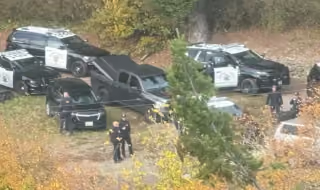
CHP's warrant service team searched a home in the 400 block of Bear Canyon Road northwest of Garberville on 9 November 2026 as part of a multi-agency narcotics investigation involving the DEA, HSI and FBI. The CHP said it did not lead the probe and would not confirm the target, the material officers shovelled, or any arrests.
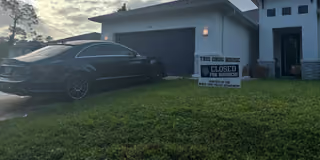
North Port police arrested Nicholas Eddy, 29, and Jessica Trach, 28, after their Special Investigations Unit searched a home on Narcissus Terrace and found marijuana packaged for sale along with cocaine, suspected LSD, steroids and pills. Both were accused of drug possession for sale, running a drug house and possessing drug paraphernalia.
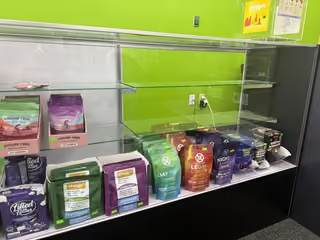
Lexington town police and state and federal partners searched five vape and hemp shops on 5 November 2026 in an undercover investigation into sales of illicit narcotics and drug paraphernalia. A shop owner says officers emptied cases, seized her phone and more than $3,300 in cash, and she plans to sue; no arrests were reported.
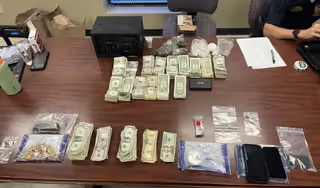
Four agencies served simultaneous search warrants at two Quincy addresses on 5 November 2026 in a drug-trafficking investigation, and police announced probable cause to arrest two men, one of them on a cannabis sale allegation. No drug quantities were disclosed and police did not confirm either man was in custody.