Ceará police found 290,000 marijuana plants at an Acopiara farm; deputy says remains buried
Police found about 290,000 marijuana plants on about three hectares of a farm in Acopiara, Ceará, on 25 June 2026, with no suspects at the site. On 3 July the state Civil Police said it had finished incinerating the plantation, but federal deputy André Fernandes said he dug up plants buried rather than burned, and the state opened disciplinary investigations.
🇧🇷 Acopiara, Ceará · Brazil
Plants destroyed
290,000
Area
3 ha
of it destroyed
5 t
Agencies
Polícia Civil do Estado do Ceará, Corpo de Bombeiros Militar do Estado do Ceará +1
Police in Ceará found about 290,000 marijuana plants on a farm in Acopiara, in
the state’s interior, during an operation on 25 June 2026.[1]The Civil Police
of Ceará (PCCE) said the plantation covered about three hectares, with some
160,000 plants still growing and 130,000 already harvested.[1]The state’s
Civil Police described it as one of its largest plantation seizures in recent
years, and no suspects were found at the site.[1]
On 3 July, federal deputy André Fernandes (PL) said he had returned to the farm
and dug up marijuana plants that were buried rather than incinerated, and he
filmed a video at the site.[2]Brazil’s drug law requires drugs seized without
an arrest in the act to be destroyed by incineration within 30 days, keeping a
sample for the definitive forensic report.[2]On an earlier visit on Saturday
27 June, the deputy reported finding bags of marijuana abandoned, more than half
the plantation not destroyed, notebooks and a mobile phone left behind, with no
security at the site.[2]Fernandes said the operation had been halted at the
order of some powerful person, without presenting evidence for the claim.[2]
The Civil Police said the destruction and controlled incineration was concluded
on Thursday 2 July, using a Fire Brigade technique of digging trenches, burning
the plants with petrol and diesel and covering the residue with earth.[3]The
police said what the deputy found were the remains of that plantation and of
other plants destroyed on the land, and a police director said the material was
burned and not marijuana.[3]Fernandes said the plantation had held about 5
tonnes of the drug, and that tractors from the state public works agency had
turned over the whole area.[3]
The PL party announced it would take a legal offensive, filing additions to
complaints already sent to the Federal Prosecution Service, the Federal Police
and the Ceará state prosecution service.[2]Governor Elmano de Freitas (PT)
said he had ordered immediate and rigorous investigations by the Civil Police
and by the CGD, the state body that disciplines security officers, and that
anyone involved would answer for it.[2]The case became a strain on the
re-election campaign of the governor, and the Civil Police said investigations
were continuing to identify those responsible for the plantation.[2]
Photos and video
André Fernandes holding a spade at the spot where the marijuana plants had been buried, in a frame from the video he filmed at the Acopiara farm. Photo: Instagram André Fernandes / ReproduçãoPhoto details
Vejaveja.abril.com.brPTCeará: pés de maconha foram enterrados e não incinerados após ação policial, diz deputado
g1g1.globo.comPTArchived copyFazenda da maconha: Polícia Civil diz que operação de destruição e incineração de droga foi concluída e explica plantas enterradas
Open questions the AI reported
The 290,000 plants, three hectares and about five tonnes are the authorities' estimates for the plantation found on 25 June 2026; the actual quantity destroyed and burned has not been measured publicly.
The Civil Police says the material the deputy found was the residue of the destroyed plantation, while Fernandes says unburned plants were buried; the sources do not resolve which account is correct.
No figure was published for the number of people who worked the plantation, and no one was found at the site on 25 June; no arrests are recorded for the cultivation itself at this stage.
The report date is the day of the deputy's allegation and of the police statement; the disputed destruction work ran from 27 June to 2 July 2026.
The police disciplinary and prosecution investigations into the operation were still open, and no court decision or sanction had been reported.
The claim that the operation was halted by order of a powerful figure is the deputy's, made without evidence, and is repeated here as his allegation only.
The Veja photo is a frame from a video filmed by the deputy's team about his visit, not a police image of the destroyed plantation; no handout photo of the destruction itself could have its direct image address confirmed from the pages opened.
Separate later steps in the same case, including the arrest and release of the farm owner and the October 2026 indictment of five people, are outside this report and belong to a report on those steps.
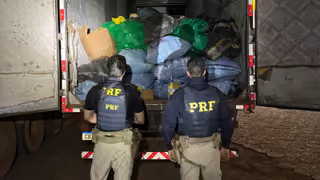
Federal Highway Police arrested a 44-year-old truck driver in the early hours of 11 November 2026 after finding more than half a tonne of skunk, about 591 packages, in a false bottom of his truck's cargo body at km 319 of the BR-070 in Jussara, Goiás. The load had left Cacoal, Rondônia, bound for Goiânia, and the driver was to be paid R$10,000.
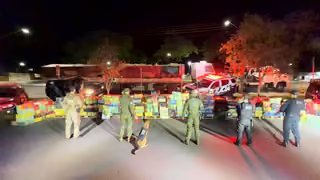
Paraná's Border Police Battalion and federal agencies seized 7,781 kg of marijuana and skunk hidden in a maize load on a bitrem truck stopped on BR-163 near Marechal Cândido Rondon, and arrested a 30-year-old man and a 20-year-old woman. The operation, part of Operação Protetor, ran from 10 to 11 November 2026, and the battalion put the loss to organised crime at R$16,318,000.
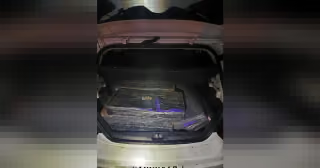
Federal Highway Police officers seized 245.6 kilograms of marijuana from a white Chevrolet Onix that fled an inspection on the BR-163 in Lindoeste, western Paraná, on the night of 10 November 2026. The 25-year-old driver and a 16-year-old passenger were taken with the car and the drug to the Civil Police station in Cascavel.
Military Police in Lajinha found 58 marijuana tablets hidden in a stove in an abandoned house on 10 November 2026 and seized 62 tablets in all. A 20-year-old was arrested and a 17-year-old was taken into custody, and both were taken to the Civil Police station in Manhuaçu.